


When it comes to your coffee habits, the numbers speak for themselves. If you're buying coffee daily from a café, the costs can quickly add up - reaching £712 per year for a simple espresso. Specialty coffee drinkers paying £5–£6 per cup could be spending even more.
Switching to a coffee subscription can save you 15% to 30%, with costs per cup as low as 69p to £1.08. Subscriptions deliver high-quality beans to your door, cutting out transport costs and avoiding the temptation of impulse buys. Plus, they ensure your coffee is roasted within an optimal flavour window.
Here’s the breakdown:
- Daily coffee shop habit: Costs up to £60/month (£712/year).
- Home brewing with subscriptions: Costs less, around £8–£12 per 250g bag, with bulk discounts reducing costs further.
- Savings: Potential to save up to £240 annually, depending on consumption.
Subscriptions also offer flexibility in delivery schedules and support ethical sourcing practices. If you drink coffee regularly, this could be a smarter option for your wallet and lifestyle.
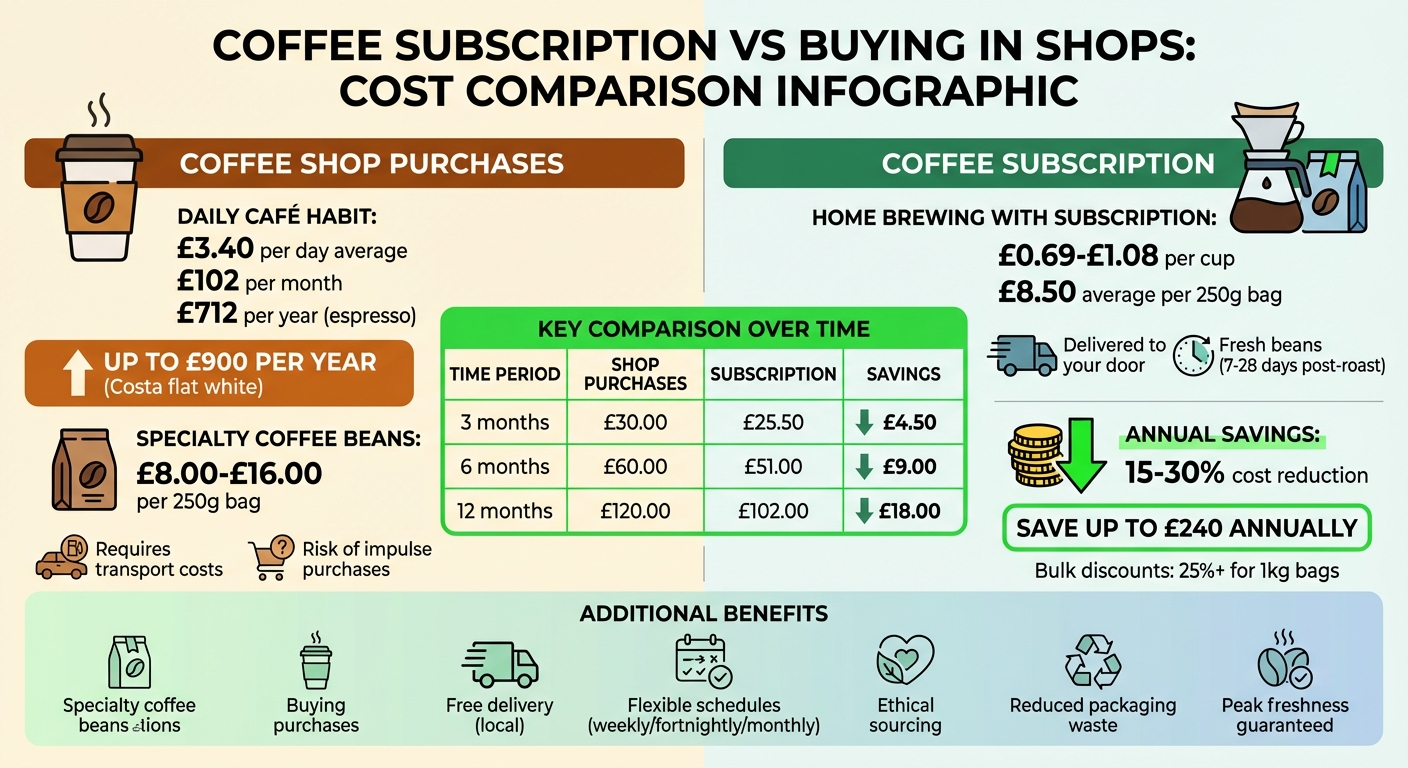
Coffee Subscription vs Shop Purchases: Annual Cost Comparison
Average Costs of Buying Coffee in UK Shops
Specialty Coffee Price Ranges
If you're buying specialty coffee beans from independent roasteries or cafés, expect to pay between £8.00 and £16.00 for a 250g bag. That’s a noticeable jump from the £3.00 to £6.50 you’d typically spend on supermarket beans. The higher price reflects the superior quality and ethical sourcing often associated with specialty coffee.
Prices also vary significantly by region. In London and surrounding areas, takeaway coffee prices frequently exceed £4.00, with premium options creeping into the £5–£6 range.
The rising costs aren’t random. Between 2024 and 2025, the price of Arabica beans more than doubled. This has pushed the price of a specialty flat white with plant-based milk in urban areas close to the £6.00 mark.
These price differences highlight how often you buy coffee can have a big impact on your overall spending.
How Often People Buy Coffee
With prices climbing, how often you indulge in coffee shop visits makes a huge difference. About 16% of UK coffee shop visitors buy coffee daily, while 80% visit at least once a week. On average, people spend £3.40 per day, which adds up to around £102 per month.
Generational habits also play a role in spending. Millennials shell out an average of £728 annually on coffee shop visits, followed by Gen Z at £676, while Boomers spend just £260. Over a lifetime, the average coffee drinker is estimated to spend over £29,000 on takeaway coffees.
Even your choice of coffee shop can make a big difference. For instance, grabbing a daily flat white from Greggs would cost you £507 a year, whereas the same habit at Costa would set you back £900.
Creation Coffee Subscription Pricing and Savings
Subscription Options and What's Included
Creation Coffee offers a subscription service that brings their hand-roasted, small-batch specialty coffee straight to your doorstep. You can choose from 250g, 500g, or 1kg bags, and each delivery includes their Ultimate Brew Guide. If you're a local customer, you'll also enjoy free delivery.
The subscription is flexible, allowing you to pick a delivery schedule that works for you - weekly, fortnightly, or monthly. This means you'll always have fresh coffee at home without needing to make frequent trips to the shop. Let’s take a closer look at how the subscription pricing compares to buying in-store.
Cost Comparison: Subscription vs Shops
Specialty coffee subscriptions generally range from £8.00 to £12.00 per bag, which is in line with prices from independent roasteries. The real savings come from a lower per-bag cost and avoiding the higher prices often charged in cafés.
For those who commit to longer-term plans, the savings grow even more. A pre-paid 12-month subscription, for example, reduces the cost per box from £17.99 to £15.50, saving you about £2.50 per delivery.
Here’s a breakdown of the costs over time:
| Time Period | Shop Purchases (£10/bag avg) | Subscription (£8.50/bag avg) | Monthly Saving |
|---|---|---|---|
| 3 months (3 bags) | £30.00 | £25.50 | £4.50 |
| 6 months (6 bags) | £60.00 | £51.00 | £9.00 |
| 12 months (12 bags) | £120.00 | £102.00 | £18.00 |
As you can see, the savings add up over time. If you order two bags a month, your annual savings could reach around £36.00 - enough to treat yourself to three extra bags of coffee. But it’s not just about the savings. This subscription model also supports ethical sourcing and uses less packaging, which helps reduce waste. So, not only are you cutting down on costs, but you’re also investing in sustainability and quality with every cup.
Hidden Costs and Savings Factors
Transport and Impulse Purchases
Grabbing coffee from a shop isn’t just about the price on the bag - it often comes with hidden costs. Every trip to a café or specialty roaster adds transport expenses that can quietly eat into your budget. And let’s be honest, how often do those trips lead to an unplanned pastry or sandwich? These impulse buys can quickly add up. A coffee subscription, on the other hand, delivers beans right to your doorstep. This not only cuts down on transport costs but also helps you avoid those tempting extras. Plus, it aligns perfectly with the added freshness and reduced waste benefits we’ll dive into next.
Freshness and Waste Reduction
Coffee tastes best between 7 and 28 days after it’s roasted. Subscriptions ensure your beans arrive during this peak window, unlike supermarket coffee, which often lingers on shelves for weeks or even months, losing its flavour. However, there’s a risk with excessive deliveries - if you’re not brewing enough, you might end up with stale, wasted beans.
This is where Creation Coffee’s flexible delivery options shine. Whether you need beans weekly, fortnightly, or monthly, you can tailor deliveries to your actual consumption. This means you’re always brewing fresh coffee without worrying about waste. And here’s a bonus: brewing coffee at home with ground beans is around 40% cheaper than using branded pods. Plus, spent coffee grounds can go straight into your compost bin instead of the landfill. Beyond freshness and waste reduction, subscriptions also support ethical sourcing and cut down on unnecessary packaging.
Ethical Sourcing and Reduced Packaging
Creation Coffee prioritises direct trade and ethical sourcing, ensuring farmers are fairly paid and sustainable practices are upheld. Many subscription services also use eco-friendly packaging, such as plastic-free, compostable materials for both bags and delivery boxes. These letterbox-friendly designs reduce the need for extra delivery trips, saving on transport costs.
When it comes to sustainability, ground coffee has a clear edge over pod-based systems. As Sabrina Sahota, Senior Researcher & Writer at Which?, explains:
Many pods are also made from plastic or aluminium, so can't be placed straight into your household recycling. So ground coffee is also a more sustainable option as it can be placed in your food waste or home composting bin.
sbb-itb-cca2aed
BUYING COFFEE | ONLINE OR GROCERY STORE?
Cost Analysis by Consumption Level
Let’s dive into how your coffee consumption habits can impact overall savings when you opt for a subscription.
Low Consumption (1 Bag per Month)
If you’re only going through one bag of coffee a month, the savings might not seem huge, but they’re definitely there. A subscription ensures you always have fresh coffee delivered right to your door - no extra trips required. Plus, brewing at home is still far cheaper than buying your coffee from a café. Even at this lower level of consumption, replacing takeaway coffees with home-brewed ones can make a noticeable difference to your wallet.
Medium Consumption (2-4 Bags per Month)
For those who drink a bit more, the perks of a subscription really start to shine. Many services offer multi-bag discounts and flexible delivery schedules - whether you need coffee weekly, fortnightly, or monthly - so you can get exactly what you need without any waste.
Pre-paying for a longer subscription period can cut costs even further. When you factor in bulk discounts and the money saved on transport, medium-level consumers can pocket £94 to £236 each month compared to the cost of daily café visits.
High Consumption (1kg or More per Month)
If you’re a heavy coffee drinker, subscriptions can deliver the biggest savings. Ordering in bulk, like 1kg bags, slashes costs by 25% or more compared to buying smaller 250g packs. As Maxwell Colonna-Dashwood, Founder of Colonna Coffee, explains:
Taking out a monthly subscription is cheaper than buying coffee piecemeal in small packets, as is buying in bulk – there you can save 25 per cent or more.
For households or workplaces with high coffee demand, the savings are substantial. A daily espresso habit at a café could easily cost around £60 per month or £712 per year. Switching to a subscription with larger bags not only cuts those costs dramatically but also ensures you’re getting top-quality, fresh coffee every time.
No matter how much coffee you drink, subscriptions offer a clear financial edge over regular café visits.
Which Saves More Money?
Main Findings
Choosing coffee subscriptions over high-street purchases can save you between 15% and 30%. Consider this: a daily espresso habit at your local café might set you back around £712 per year, but brewing your coffee at home with subscription beans can dramatically cut that cost.
Subscriptions also help reduce other expenses, like transport and those tempting impulse buys. Plus, they deliver beans roasted at their peak freshness (typically within 7–28 days), which means less waste and better-tasting coffee.
If you’re a medium or heavy coffee drinker, the savings become even more noticeable - ranging from £90 to £240 a month, thanks to bulk discounts of 25% or more for larger orders. Even if you’re a lighter drinker, you’ll still see some savings, though these may be smaller due to fixed delivery costs.
For anyone who drinks coffee regularly, these savings make subscriptions a smart and budget-friendly option.
Our Recommendation
Think about how much coffee you consume each month. If you often buy specialty coffee from shops or cafés, a subscription could save you money while ensuring a steady supply of fresh beans.
With Creation Coffee subscriptions, you’ll not only enjoy ethically sourced, freshly roasted beans delivered on your schedule but also benefit from the convenience and financial savings of having your coffee sent straight to your door.
FAQs
How do coffee subscriptions help reduce waste and keep coffee fresh?
Coffee subscriptions are a smart way to cut down on waste while keeping your coffee fresh. By delivering just the right amount at the right time, they help you avoid overstocking, which means less coffee going stale or ending up in the bin.
Most services offer freshly roasted beans and let you personalise details like grind size or whether you prefer whole beans. This means your coffee is tailored to your brewing style and drinking habits, ensuring every cup is as fresh as it can be. By syncing deliveries with how much coffee you actually use, subscriptions promote thoughtful consumption and support a more sustainable approach to enjoying your daily brew.
Can a coffee subscription save money compared to buying from shops?
A coffee subscription can often help you save money, but it really comes down to how much coffee you consume. For those who drink coffee regularly, subscriptions usually offer better value. In the UK, prices typically range from £8 to £15 per bag, with a 350g bag often priced around £12.50 - usually cheaper than picking up individual bags at the shop. Many subscriptions also sweeten the deal with perks like discounts on bulk orders or exclusive offers, making them even more appealing.
If you're someone who enjoys coffee daily or several times a week, the cost per cup tends to be lower with a subscription, especially compared to frequent purchases from shops. On the other hand, if you only drink coffee occasionally, a subscription might not be as cost-effective unless your consumption justifies the monthly expense. In the end, how much you save depends on your coffee-drinking habits and how much you value the added convenience and freshness of a subscription.
How does ethical sourcing in coffee subscriptions support farmers and protect the environment?
Ethical sourcing in coffee subscriptions creates a win-win for both farmers and the planet, fostering fair practices and sustainability. For farmers, this means fair wages that enhance their quality of life and strengthen their local communities. It also promotes safer working environments and offers a path to long-term economic security in coffee-growing regions.
From an environmental perspective, ethical sourcing champions eco-friendly farming techniques. These methods aim to reduce deforestation, conserve water, and maintain healthy soil. By minimising chemical use and cutting down carbon emissions, they help safeguard ecosystems and build a more sustainable coffee production process. Opting for ethically sourced coffee not only ensures you're sipping on quality but also supports responsible farming and a healthier planet.