


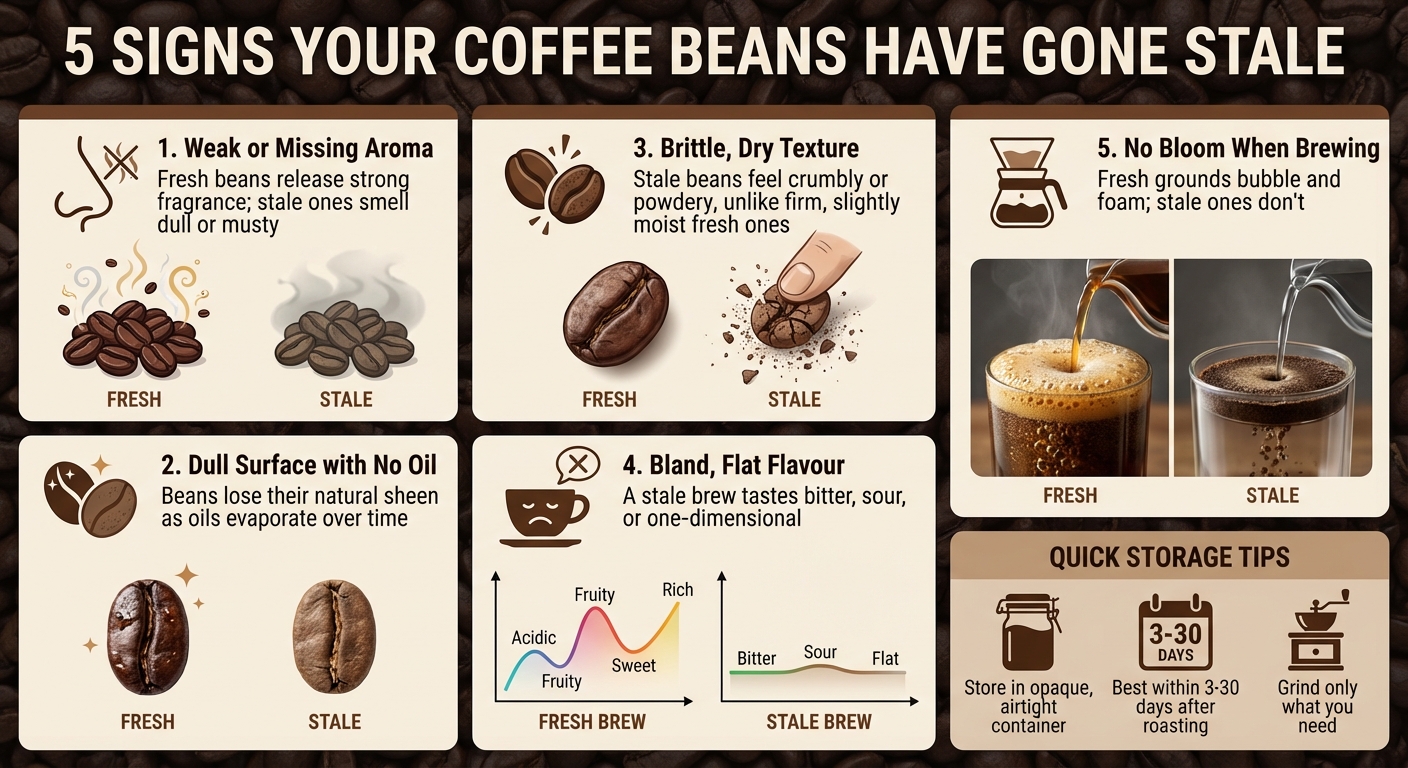
If your coffee doesn’t smell, taste, or brew the way it should, your beans might be past their prime. Stale coffee beans lose their aroma, flavour, and texture, leaving you with a disappointing cup. Here are five clear signs your beans aren’t fresh anymore:
- Weak or missing aroma: Fresh beans release a strong fragrance; stale ones smell dull or musty.
- Dull surface with no oil: Beans lose their natural sheen as oils evaporate over time.
- Brittle, dry texture: Stale beans feel crumbly or powdery, unlike firm, slightly moist fresh ones.
- Bland, flat flavour: A stale brew tastes bitter, sour, or one-dimensional.
- No bloom when brewing: Fresh grounds bubble and foam; stale ones don’t.
To keep your coffee at its best, store beans in an airtight, opaque container, away from heat and moisture. Buy smaller amounts and grind only what you need. For long-term storage, vacuum-seal and freeze in portions. Always check the “roasted on” date to ensure you’re brewing within the ideal 3–30 day window.
5 Signs Your Coffee Beans Have Gone Stale
1. Weak or Missing Aroma
Aroma Strength and Freshness
One of the simplest ways to check the freshness of coffee beans is by using your nose. Fresh beans release a strong, inviting fragrance as soon as you open the bag or grind them. If that rich aroma is faint - or missing entirely - it’s a sign the beans are past their best.
"If your beans are missing that 'freshly roasted' smell, there's a good chance they're old." - Austin Barker, Barista
Over time, oxidation breaks down the aromatic oils in coffee, causing those delicate compounds to fade. This process can leave your beans with a dull, musty, or even cardboard-like smell. Additionally, since coffee beans are porous, they can absorb odours from their environment. If stored near strong-smelling items, they may pick up those unwanted scents.
A quick sniff test after grinding can reveal a lot. If there’s little or no scent, the volatile oils responsible for the coffee’s aroma have likely degraded. Another method is the bag test: place about half a cup of beans in a resealable bag, press out the air, and seal it. If the bag inflates overnight, it means the beans are still releasing carbon dioxide and are fresh. If it stays flat, the beans have gone stale.
Keep in mind, whole beans usually maintain their aroma for 2–4 weeks after roasting, while ground coffee starts losing its fragrance within just 1–2 weeks. To preserve the full flavour and aroma, grind only as much coffee as you need. For further clues about freshness, take a closer look at the surface of the beans.
sbb-itb-cca2aed
2. Dull Surface with No Oil
Appearance (Oiliness or Sheen)
Fresh coffee beans often have a glossy or slightly shiny surface. This sheen comes from natural oils that are pushed to the surface during roasting. When beans start to look dull or dry, it’s a strong indicator that these oils have evaporated, signalling the beans are no longer fresh.
The roast level also plays a role in a bean's appearance. Dark roasts are typically oilier because the longer roasting process makes the beans more porous, allowing more oils to surface. On the other hand, light and medium roasts usually have a matte finish. If you notice an oily sheen on these lighter roasts, it might point to oxidation rather than freshness.
"Once all the oils have evaporated over time, the beans will no longer have any aroma." - Timbertrain Coffee Roasters
The texture of the beans further complements visual clues when determining freshness.
Texture (Firmness and Moisture)
The way coffee beans feel can reveal a lot about their freshness. Try rubbing a few beans between your fingers. Fresh beans tend to feel slightly moist and, when ground, will clump together. In contrast, stale beans feel dry and crumbly. These physical changes directly affect how the coffee brews and its overall flavour profile. Without the natural oils, the resulting brew can taste flat and lack smoothness.
3. Brittle, Dry Beans
Texture (Firmness and Moisture)
When coffee beans lose their freshness, they become brittle and dry. This happens as their natural oils and moisture gradually evaporate. Fresh beans, on the other hand, should feel slightly firm and may leave a faint oily residue on your fingers. In contrast, stale beans often feel grainy or even powdery to the touch.
This change in texture is a handy way to gauge the quality of your beans. One method to try is the snap test: press a bean between your fingers. A fresh bean will snap cleanly, while a stale one may crumble or feel soft and spongy. This structural breakdown affects not only how the beans grind but also how they brew.
"Fresh beans grind with a clean snap. If they're too soft, crumbly, or turning to dust, they've probably been sitting around too long. That'll throw your brew off - especially with espresso, where consistency is everything." - Roasting Party
Another easy method is the finger rub test. Take a pinch of ground coffee and rub it between your fingers. Fresh grounds will clump slightly because of their remaining oils. If the grounds feel dry, grainy, and don’t stick together, those essential oils have likely evaporated.
Stale beans also produce an excess of fine particles (dust) when ground. These fine particles can disrupt the brewing process, leading to uneven extraction and a less balanced flavour.
4. Bland, Dull Flavour
Taste complexity and balance
Taste is a powerful indicator of a coffee bean's freshness, going beyond just aroma and appearance.
Stale beans reveal their age through a lacklustre, uninspiring flavour. In contrast, fresh coffee bursts with distinct and layered notes - think crisp apple, juicy orange, or rich chocolate. When beans lose their freshness, these vibrant flavours vanish, leaving behind a brew that's overly bitter, sour, or flat, tasting like generic coffee.
"Stale coffee tastes like disappointment. Bitter without reason. Hollow. Watery. Sometimes sour or bland. That one-dimensional punishment cup." - Avspresso
This decline in taste happens because oxidation breaks down the oils that carry flavour, leaving your coffee either bitter or sour. As beans age, they also lose their sweetness and complexity, resulting in a brew that feels flat and one-dimensional. If your coffee packaging promises fruity or floral flavours but your cup tastes bitter or bland, it’s a clear sign the beans have oxidised and passed their peak.
Coffee typically reaches its flavour "sweet spot" between 3 and 30 days after roasting. Beyond 4 weeks, even the finest roasted beans begin losing their defining flavours and sweetness. By 6 to 8 weeks, most of the clarity and complexity is gone. Fresh coffee should leave a clean, lingering finish, while stale coffee feels "empty" in the middle and fades quickly after the first sip.
Understanding these changes in taste can help you enjoy coffee at its best and guide you towards better storage and brewing practices.
5. Missing Bloom When Brewing
Bloom Activity During Brewing
The bloom is a simple yet effective way to gauge the freshness of your coffee.
When you pour hot water over freshly ground coffee, you should see bubbling and foaming - a lively reaction that signals freshness. This happens because roasting traps carbon dioxide (CO₂) inside the beans, typically making up about 1% to 2% of their volume. When hot water hits the grounds, it forces the gas out, creating that bubbling effect and lifting the grounds. If your coffee grounds just get wet and sink without any bubbling, it’s a sign that the beans have released most of their CO₂ and are no longer fresh.
"No bloom = no freshness." – Cafe Kubal
Degassing starts right after roasting and speeds up significantly once the beans are ground. Grinding exposes more surface area, allowing CO₂ to escape faster. This is why pre-ground coffee often lacks bloom. On the other hand, whole beans can release CO₂ for about two weeks after roasting, with the best brewing period falling between 3 and 30 days post-roast.
A strong bloom, much like a rich aroma or a shiny surface on the beans, is a clear sign that your coffee is at its best. Observing the bloom works hand-in-hand with aroma and texture checks to confirm freshness.
If you’ve already tried the bag test (mentioned earlier), you’ll know if your beans are still releasing CO₂, which is crucial for bloom. For a quick visual test, try a pour-over brew. Fresh coffee will create a dome of lively bubbles during blooming, while stale coffee will simply soak up the water and stay flat.
"If you notice a lack of bubbles during blooming, it suggests that the coffee has lost some of its essential compounds, including the gas that is released during roasting." – Terminal 3 Coffee Roasters
How to Tell If Your Coffee Has Expired | Signs of Stale Beans Explained
How to Keep Coffee Beans Fresh
If you want your coffee beans to stay fresh and flavourful, it’s all about storing them the right way. Coffee starts to lose its quality when exposed to oxygen, light, heat, and moisture. But with a few simple tricks, you can slow this process down and enjoy fresher coffee for longer.
Use an airtight, opaque container to store your beans. Materials like stainless steel, ceramic, or dark glass work best. Keep the container in a cool, dark cupboard (around 15–21°C) and far from heat sources like ovens, kettles, or sunny windowsills. Avoid putting your beans in the fridge - moisture and fluctuating temperatures can ruin them. For long-term storage, divide the beans into single-use portions, vacuum-seal them, and freeze. Just remember to let them thaw completely to room temperature before brewing.
Buy smaller quantities to keep your coffee at its freshest. For instance, a 250g bag is ideal for consuming within the peak freshness window of two to three weeks. Always check the "roasted on" date instead of the "best before" label - coffee beans are usually at their best between 5 and 30 days after roasting. And here’s a key tip: grind only what you need right before brewing. Ground coffee loses up to 60% of its aromatic compounds within just 15 minutes.
"The best way to store coffee is to store it in the bag it comes in. Most coffee bags are designed with a gas-release valve on them, which does a great job of letting that gas expel without letting air in." – Erika Vonie, Director of Coffee, Trade
Here’s a quick guide to different storage methods and when to use them:
| Storage Method | Advantages | Disadvantages | When to Use |
|---|---|---|---|
| Original Bag (with Valve) | Built-in CO₂ release; no transfer needed; opaque. | Not perfectly airtight once opened. | Short-term (1–2 weeks) after purchase. |
| Airtight Opaque Canister | Blocks light and oxygen; stable environment. | Traps existing air in the headspace. | Daily use within 2–4 weeks. |
| Vacuum Canister | Actively removes oxygen from the container. | More expensive; may require manual operation. | For premium beans and maximum freshness. |
| Freezer (Vacuum Sealed) | Slows ageing process significantly. | Risk of freezer burn and moisture if not sealed properly. | Long-term storage (2+ months). |
Storing coffee correctly can extend its flavour retention by up to 400%. Light roasts tend to last longer than dark roasts because they’re denser and have less surface oil, which slows oxidation. If your coffee bag has a one-way valve and a resealable zip, it’s often good enough for short-term storage. These bags let CO₂ escape while keeping oxygen out.
Conclusion
Spotting stale coffee beans is easier than you might think. Look out for these tell-tale signs: a fading aroma, a dull or oily appearance, a brittle texture, flat flavours, or a lack of bloom during brewing. As Avspresso puts it, "Fresh coffee transforms your morning routine from caffeine delivery to sensory experience". By recognising these indicators, you can make sure every cup delivers the flavour it should.
Freshly roasted coffee is a delicate thing. Studies show that the best flavour window is typically between 3 and 30 days after roasting. This is why the "roasted on" date is far more useful than any "best before" label when choosing your beans.
At Creation Coffee, our roast-to-order method ensures your beans arrive at their peak, brimming with the aromatic compounds that make each brew unforgettable. To keep that freshness, store your beans in an opaque, airtight container in a cool, dark place. Grinding only what you need and buying smaller amounts you can use within two to three weeks will also help preserve their quality.
Freshness isn't just about taste - it's a way of respecting the care and skill that farmers and roasters pour into every batch. With these five signs in mind, you can avoid stale beans and fully enjoy the rich flavours of a well-crafted roast. No more settling for a mediocre cup!
FAQs
Can stale coffee beans make you ill?
Stale coffee beans probably won’t make you sick, but they can leave you with a less-than-pleasant taste and smell in your cup. That said, if the beans are stored incorrectly, they could develop mould or go off, which might carry health risks. To keep things safe and tasty, store your beans in a cool, dry spot and aim to use them within their suggested timeframe for the best flavour and peace of mind.
How can I tell if it’s my grinder or my beans?
To figure out why your coffee tastes stale, start with the beans. Before grinding, give them a sniff. Fresh beans will have a rich, inviting aroma, while stale ones might smell faint or even musty. If your beans pass the freshness test but the coffee still tastes off, the problem could lie with your grinder. An uneven grind or the wrong grind size can mess up the extraction process, leaving you with lacklustre coffee. The solution? Use fresh beans, store them properly, and invest in a good-quality grinder.
Should I throw away stale beans or can I still use them?
When coffee beans go stale, they lose their flavour, aroma, and overall quality. This leads to a flat, uninspiring brew that falls short of expectations. While stale beans are still safe to consume, they won't deliver the rich and aromatic experience you look forward to in a great cup of coffee. Opting for fresh beans is the best way to ensure your coffee is full of the vibrant taste and aroma you love.