


Single origin coffee refers to coffee sourced from a single location, such as a country, region, or farm. Unlike blends, which mix beans from various places to create consistency, single origin coffee highlights the distinct flavours of its origin. These flavours are shaped by factors like altitude, soil, and climate (known as terroir) and can range from fruity and floral to chocolatey and nutty.
Key Points:
- Traceability: You can trace single origin coffee back to its exact source, ensuring transparency and fair practices.
- Flavour Diversity: Offers bold, unique notes that reflect its growing conditions, unlike the balanced taste of blends.
- Types: Includes estate coffee (from one farm), micro-lots (specific fields or altitudes), and nano-lots (small, carefully processed batches).
- Brewing Methods: Techniques like pour-over (e.g., V60, Chemex) or immersion (e.g., French press) help bring out the unique flavours.
- Ethical Sourcing: Often linked to direct trade, supporting fair pay and responsible farming.
Single origin coffee is ideal for those who appreciate nuanced flavours and want to support ethical sourcing. Whether it’s Ethiopian beans with blueberry notes or Brazilian coffee with chocolate undertones, each cup offers a distinct taste experience.
What's the deal with Single Origin Coffees?
What Is Single Origin Coffee?
Single Origin Coffee vs Blends: Key Differences Comparison Chart
How Single Origin Coffee Is Defined
Single origin coffee refers to coffee sourced from a single, clearly defined location - this could be as broad as a country or as specific as an individual farm, cooperative, or even a single field. This sets it apart from most supermarket coffees, which typically combine beans from multiple regions.
Within the world of single origin coffee, there are a few distinct categories. Estate coffee comes from one large farm or a group of farms that process their beans at the same mill. Micro-lots, on the other hand, are produced from a specific field on a farm, often grown at a particular altitude and harvested on a specific day. The rarest of all are nano-lots, which are tiny batches processed with extraordinary attention to detail.
"Single origin coffee represents a refined approach to coffee sourcing that celebrates the unique characteristics of coffee grown in a specific geographical location." - Seven Sisters Coffee Co
One of the key features of single origin coffee is its traceability - this transparency allows consumers to directly support sustainable practices, rather than buying from an anonymous supply chain.
Another defining factor is the concept of terroir - the unique combination of soil, climate, altitude, and processing methods that influences a coffee's flavour. For example, coffee grown in Kenya's high-altitude regions develops a very different taste compared to beans from Brazil's lower-altitude farms. These differences in terroir create the distinct flavours that make single origin coffee so special.
Understanding these characteristics helps set the stage for comparing single origin coffee with blends.
Single Origin vs. Coffee Blends
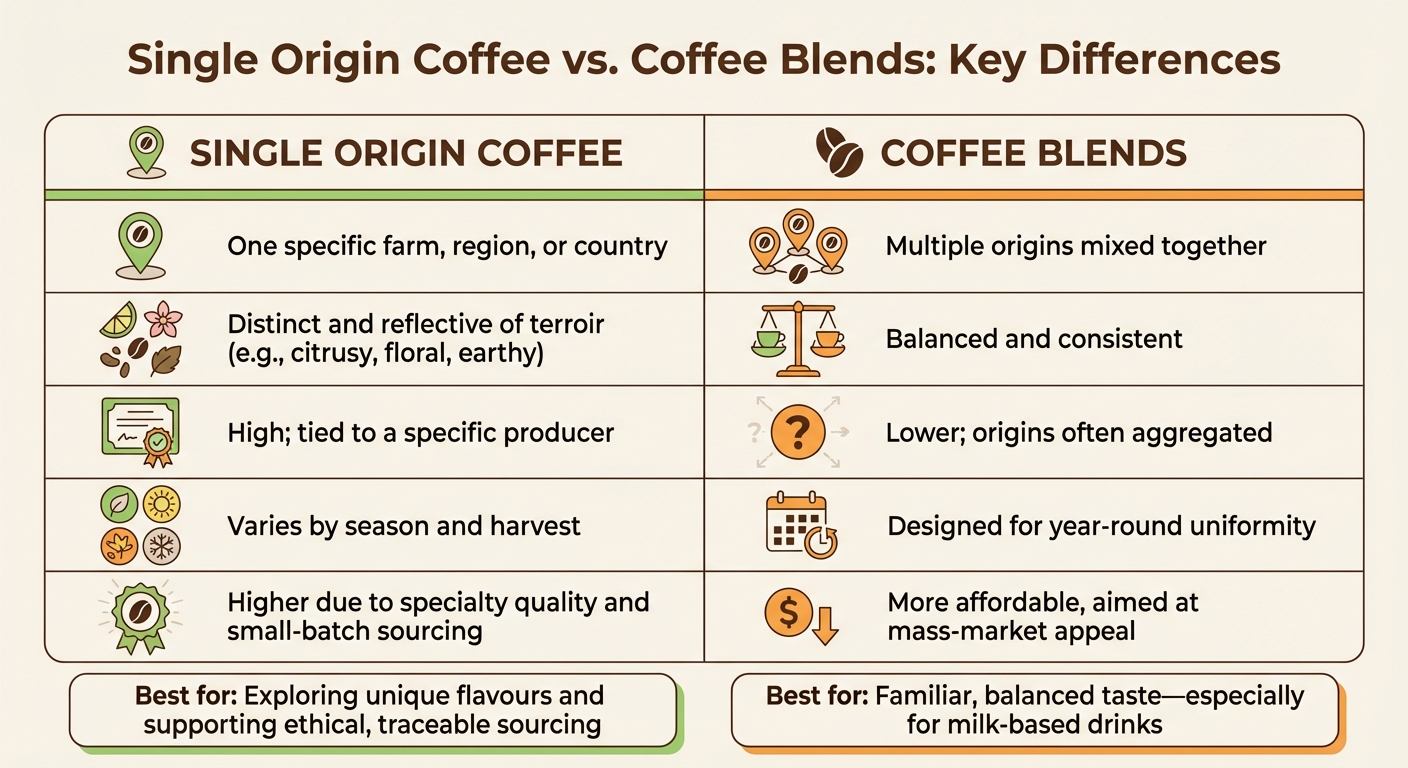
Unlike single origin coffee, which focuses on showcasing the unique qualities of one specific place, coffee blends are crafted by combining beans from different origins to create a consistent flavour profile. While single origin coffee celebrates individuality, blends are designed for balance and reliability.
| Feature | Single Origin Coffee | Coffee Blends |
|---|---|---|
| Source | One specific farm, region, or country | Multiple origins mixed together |
| Flavour Profile | Distinct and reflective of terroir (e.g., citrusy, floral, earthy) | Balanced and consistent |
| Traceability | High; tied to a specific producer | Lower; origins often aggregated |
| Consistency | Varies by season and harvest | Designed for year-round uniformity |
| Price Point | Higher due to specialty quality and small-batch sourcing | More affordable, aimed at mass-market appeal |
Single origin coffee is ideal if you're looking to explore unique flavours and support ethical, traceable sourcing. On the other hand, coffee blends are a better choice when you want a familiar, balanced taste - especially for milk-based drinks. Since single origin coffees are tied to specific harvests, they’re often seasonal and best enjoyed fresh.
How Terroir Affects Coffee Flavour
What Terroir Means for Coffee
The term terroir, borrowed from the wine world, refers to how the environment where coffee is grown influences its taste. This includes factors like soil type, altitude, climate, and even local microclimates . Just as a Bordeaux wine is distinct from a Burgundy, coffee from Kenya develops flavours that are entirely different from beans grown in Brazil.
Altitude plays a big role in shaping coffee's character. Higher altitudes slow down the maturation of coffee cherries, resulting in denser beans with pronounced floral and fruity notes. Meanwhile, beans grown at lower elevations tend to have a fuller body and less acidity . For instance, Kenyan beans grown at high altitudes are known for their vibrant, fruity flavours, while Brazilian beans from lower elevations often deliver rich, chocolatey undertones .
The soil also leaves its mark on coffee. Volcanic soils, for example, often produce beans with complex flavours, while sandy soils can result in lighter, brighter acidity . Climate differences, such as those between Brazil's northern and southern regions, further add to the diversity of coffee profiles .
"Terroir plays a crucial role in determining the flavour profile... ensuring that the coffee retains the essence of its origin, making single-origin coffee not merely a beverage but a taste experience."
– Copper Roastery
Ideal growing conditions for coffee plants fall between 15–24°C. Combined with rainfall patterns and surrounding vegetation, these factors create the volatile compounds that shape the distinct taste of beans from each region .
Together, these environmental elements form the foundation of the unique flavour profiles discussed below.
Flavour Profiles by Region
The influence of terroir is evident in the diverse flavour profiles of coffee from different regions. Ethiopian coffee, grown in the birthplace of Arabica, is famous for its bright acidity and notes of blueberry, strawberry, and jasmine . Kenyan coffee takes this vibrancy up a notch, offering bold flavours like blackcurrant, grapefruit, and citrus, with an unusual savoury quality that some describe as tomato-like . Colombian coffee, known for its balance, features mild acidity, a smooth texture, and flavours of caramel, chocolate, and red fruits . Brazil, the largest coffee producer in the world, is renowned for its beans with a heavy body, low acidity, and deep chocolate, nutty, and earthy flavours . Meanwhile, Guatemalan coffee, grown in volcanic soil, delivers a robust, full-bodied cup with notes of chocolate, toffee, and citrus .
| Region | Body | Acidity | Primary Flavour Notes |
|---|---|---|---|
| Ethiopia | Light to Medium | High/Bright | Blueberry, strawberry, jasmine, floral |
| Kenya | Full/Intense | Very High | Blackcurrant, grapefruit, citrus, tomato |
| Colombia | Medium/Smooth | Mild | Caramel, chocolate, nutty, red fruits |
| Brazil | Heavy/Rich | Low | Chocolate, nuts, earthy undertones |
| Guatemala | Full/Robust | Bright | Chocolate, toffee, citrus |
sbb-itb-cca2aed
How to Brew Single Origin Coffee
To truly appreciate the unique flavours shaped by terroir, precise brewing techniques are key.
Best Brewing Methods
The way you brew your coffee plays a huge role in how single origin flavours shine. Pour-over methods - like the V60, Chemex, and Kalita Wave - are excellent for showcasing clarity and bright acidity. These methods give you greater control over the brewing process, allowing delicate flavour notes to stand out. For instance, the V60 uses thinner filters and spiralled ridges to ensure even extraction, while the Chemex employs thicker filters to create a clean, light-bodied cup. The Kalita Wave, with its flat bottom and three small holes, is more forgiving for beginners, making it easier to achieve consistent results compared to the V60's single large outlet.
On the other hand, immersion methods like the French press (or cafetière) are perfect for enhancing body and sweetness. The Aeropress offers a middle ground, giving you the flexibility to experiment with both clean and concentrated brews, making it a great choice for those new to brewing. To fully enjoy the distinct characteristics of single origin beans, it’s best to drink them black - adding milk can overshadow the subtle flavour notes that make each origin unique.
Once you've chosen your method, fine-tuning the brewing variables is the next step to unlocking the best from your beans.
Getting the Best Flavour
Understanding and controlling brewing variables is essential to bring out the full potential of your coffee. Start by managing water temperature, grind size, and the coffee-to-water ratio. The Specialty Coffee Association suggests a brewing temperature between 90.5°C and 96°C. While hitting an exact temperature isn’t critical, maintaining stability is - preheating your equipment can help minimise heat loss during brewing.
Grind size is another crucial factor. If your coffee tastes thin or sour, it’s likely under-extracted - try a finer grind. If it’s overly bitter, it’s over-extracted - go coarser. A burr grinder is highly recommended for consistent particle size, which is essential for a high-quality brew. As a starting point, use a ratio of 1:16 (1 gram of coffee to 16 grams of water), and adjust between 1:15 and 1:17 to suit your preferences.
"Water makes up more than 98% of nearly every cup of drip coffee that you've ever had!"
– Mike Greene, Prima Coffee
Precision matters, so use a gram scale for accurate measurements - tablespoons simply aren’t reliable. Also, opt for filtered water that’s free from odours and impurities. For pour-over methods, don’t skip the bloom phase: pour about 10–15% of your total water over the grounds and wait 30 seconds. This allows the coffee to release CO₂, which can otherwise hinder proper extraction. Small tweaks like these can make a big difference in bringing out the best of your single origin beans.
Ethical Sourcing and Farming Practices
Sourcing coffee isn’t just about finding the best flavours - it’s also about supporting the growers and respecting the land they cultivate. Let’s delve into direct trade and sustainable farming practices, which work hand in hand to ensure quality and fairness.
Direct Trade and Traceability
Direct trade reshapes how coffee journeys from farm to cup by fostering direct partnerships between roasters and producers. These partnerships establish stable prices, long-term contracts, and a sense of security for farmers. For example, direct trade agreements often set prices above commodity market levels, averaging around US$1.80 per pound (approximately £1.40). This stability enables farmers to plan ahead and invest in their farms with confidence.
"Direct Trade pinpoints the price, contract, and relationship that the roaster and producer directly agree and commit to."
– Origin Coffee
Traceability is another key advantage of direct trade. It ensures transparency across the entire supply chain, guaranteeing that payments reach the right hands. Roasters often visit farms every two years, deepening their understanding of the unique growing conditions and challenges farmers face. This regular interaction allows roasters to offer feedback, helping farmers refine their techniques to produce higher-quality coffee.
By strengthening these direct relationships, direct trade not only ensures fairer practices but also promotes responsible farming.
Responsible Farming and Coffee Quality
The benefits of direct trade extend beyond financial security - they empower farmers to adopt responsible farming practices that enhance both their communities and the coffee itself. Fair compensation allows farmers to focus on meticulous harvesting and processing, often leading to the cultivation of small, high-quality micro-lots. These efforts frequently produce specialty coffees that score 80 or above on the Specialty Coffee Association’s 100-point scale, with the finest coffees scoring 86 or higher.
Sustainable farming methods play a crucial role in protecting the environment and ensuring long-term coffee production. Practices like promoting biodiversity, maintaining healthy soil, and minimising pesticide use contribute to thriving ecosystems and better-tasting coffee. For instance, farming at higher altitudes allows beans to mature more slowly, resulting in denser beans with richer, more vibrant flavours. Financial stability provided by direct trade gives farmers the freedom to adopt these eco-friendly methods without the pressure of short-term survival.
"Knowing exactly where a coffee came from - country, region, cooperative, or farm - gives both the roaster and consumer assurances about quality and equity while providing recognition and fair pay for the producer."
– Glen Lyon Coffee
When you choose ethically sourced, traceable single-origin coffee, you’re not just savouring a unique flavour - you’re supporting a system that values fairness, quality, and the environment.
Conclusion
Single origin coffee is a true celebration of its origins, offering a vibrant array of flavours. Think of the zesty citrus notes from Kenyan beans grown at high altitudes or the deep, chocolatey richness found in Brazilian varieties. Each cup tells a story of where it came from, making every sip a unique experience.
What sets single origin coffee apart isn’t just its flavour - it’s the transparency it provides. You can trace your beans back to a specific country, region, cooperative, or even a single farm. This level of traceability ensures not only exceptional quality but also supports ethical practices. It means fair pay for farmers and a commitment to transparency throughout the supply chain.
When brewing, choose methods that best bring out the distinct characteristics of your beans, allowing their unique profiles to shine.
For a personalised coffee experience, Creation Coffee offers hand-roasted, small-batch single origin beans, sourced through direct trade and delivered fresh to your door. With sizes ranging from 250g to 1kg and flexible subscriptions, you can explore exceptional flavours while supporting sustainable farming practices.
FAQs
Why is single origin coffee often more expensive than coffee blends?
Single origin coffee tends to come with a higher price tag, and there’s a good reason for it. It’s sourced from a specific region, farm, or even a single lot, which guarantees traceability and a distinct flavour profile. This exclusivity often translates to smaller harvests and limited supply, naturally pushing up the cost.
What’s more, the production of single origin coffee often involves a careful focus on quality. From cultivation to processing, every step is handled with precision, frequently incorporating ethical practices that benefit farmers and protect the environment. Add to this the labour-intensive effort required to uphold these high standards, and it becomes clear why single origin coffee commands a premium price.
How does terroir affect the flavour of single origin coffee?
Terroir plays a crucial role in shaping the flavour of single origin coffee. It refers to the environmental factors of the region where the coffee is cultivated - things like soil type, altitude, climate, and rainfall all come together to influence the coffee's distinct taste.
For example, coffee grown at higher altitudes often has brighter acidity and more complex aromas. Meanwhile, the soil and climate can introduce fruity, floral, or even earthy notes. These natural elements combine to create a flavour profile that's tied to the region, giving coffee lovers a genuine taste of its origin. In essence, terroir turns each batch of single origin coffee into a unique snapshot of its environment, offering a one-of-a-kind experience for those who savour it.
Why does ethical sourcing matter in single origin coffee?
Ethical sourcing plays a key role in single origin coffee by ensuring that farmers and their communities are treated fairly and paid appropriately for their work. This practice not only improves livelihoods but also supports better working conditions and encourages farming methods that respect the environment, helping to preserve the delicate ecosystems where coffee is cultivated.
When consumers opt for ethically sourced single origin coffee, they contribute to maintaining the distinct flavours and high quality of the beans while fostering transparency and trust across the supply chain. This choice reflects a commitment to social responsibility, helping coffee-growing communities flourish and protecting the environment for generations to come.