


Want your coffee to taste great every time? Proper storage is key. Coffee beans lose flavour fast when exposed to oxygen, light, heat, or moisture. Here’s how you can preserve their taste and aroma for longer:
- Use airtight containers: Block oxygen and moisture with stainless steel or ceramic options. Avoid plastic.
- Store in a cool, dark place: Keep beans away from sunlight and heat sources, ideally in a cupboard.
- Choose opaque containers: Protect beans from UV rays to prevent flavour loss.
- Divide into weekly portions: Minimise exposure to air by only opening small amounts at a time.
- Avoid the fridge: Beans absorb odours and moisture, ruining their taste.
- Freeze for long-term storage: Use vacuum-sealed bags to extend freshness up to a year.
- Maintain consistent temperature: Store between 15°C and 21°C for best results.
Quick Tip: For the freshest coffee, buy only what you’ll use in 2–4 weeks and always transfer beans to an airtight, opaque container. Small changes can make a big difference in every cup.
1. Use Airtight Containers
Keeping Oxygen at Bay
Oxygen is the ultimate enemy of your coffee's flavour. When it meets your coffee beans, it sets off oxidation - a process that breaks down the fats and oils responsible for that rich taste, leaving you with a stale cup.
Airtight containers are your best defence. They rely on thick silicone or rubber gaskets to block fresh oxygen from creeping in, which can extend the beans' flavour lifespan by 300–400% compared to leaving them in an open bag. If you’ve got freshly roasted beans, look for containers with one-way degassing valves. These handy features let carbon dioxide escape while keeping oxygen out during the critical 3–7 day degassing period. This is especially important for beans that are ethically sourced, as it ensures their delicate flavour profile is maintained. Using airtight storage doesn’t just lock in aroma - it also helps avoid other common storage pitfalls.
Shielding from Moisture and Odours
Coffee beans are like sponges - they absorb moisture and odours from their surroundings, which can ruin their flavour and even lead to mould. An airtight seal keeps these unwanted elements at bay.
When it comes to materials, stainless steel is a top choice. It’s non-porous, meaning it won’t soak up coffee oils that could turn rancid. Ceramic containers are another excellent option - they’re inert and opaque, providing solid protection. On the other hand, plastic containers can be problematic since they’re often porous, absorbing both oils and external odours over time. To further minimise oxygen exposure, choose a container size that matches the amount of beans you’re storing, leaving as little empty space as possible.
sbb-itb-cca2aed
2. Store in a Cool, Dark Place
Protecting from Light and UV Rays
Exposure to light - whether from the sun, UV rays, or strong artificial sources - can wreak havoc on coffee beans. This process, known as photooxidation, breaks down the delicate oils and complex compounds that give coffee its signature flavour and aroma.
"UV rays break down the complex organic molecules that give coffee its unique flavour profile, leaving it tasting lifeless." - Seven Sisters Coffee Co
Darker roasts are especially vulnerable since their oils come to the surface more quickly. This makes clear glass jars on your kitchen counter a bad idea, even if they’re airtight. Instead, store your coffee beans in a cupboard or pantry, away from windows and bright lights. Just like light, inconsistent temperatures can also speed up the staling process.
Maintaining Consistent Temperature
Keeping your coffee at a steady temperature is just as important as shielding it from light.
Heat speeds up the ageing process. Ideally, coffee should be stored at temperatures between 15°C and 21°C. Once the temperature rises above 25°C, the ageing process accelerates, making the oils surface and causing CO₂ to escape prematurely. Studies even show that for every 10°C increase, the loss of aroma doubles.
Avoid placing your beans near heat sources like ovens, kettles, dishwashers, or the top of your fridge. These areas are prone to temperature changes, which can lead to condensation and dull the coffee’s flavour. For the best results, pick a stable, cool spot like the back of a cupboard where the temperature stays consistent throughout the day.
3. Choose Opaque Containers
Keeping Light and UV Rays at Bay
While clear glass jars may look appealing, they leave your coffee vulnerable to damaging UV rays. Exposure to sunlight or even strong artificial light can break down the delicate oils, acids, and complex organic compounds that create coffee's distinct flavour. The result? Beans that taste flat, lifeless, or even bitter.
"The beans may slightly decrease in flavour if simply stored in an airtight container because they could still be exposed to light, as opposed to an opaque metal container."
– Fernando Cortez, General Manager, Aaktun
To preserve the freshness and quality of your beans, opaque containers are a must.
Stainless steel and ceramic containers are excellent choices. They effectively block UV rays, resist oil absorption, and help maintain a stable temperature.
If you prefer clear glass jars, keep them tucked away in a dark cupboard instead of placing them on display. For the best results, consider investing in opaque stainless steel or ceramic containers to safeguard your coffee’s flavour.
4. Divide Beans into Weekly Portions
Minimising Oxygen Exposure
Every time you open your coffee container, you're letting oxygen in - and that oxygen quickly impacts the flavour. In fact, up to 70% of a coffee bean's flavour can be lost in just two weeks due to oxygen exposure. By dividing your beans into weekly portions, you can keep the majority of your supply sealed and protected, exposing only the portion you’re currently using.
"Every single time you open it, you're letting in a fresh wave of oxygen. Worse still, those seals are rarely perfect after you've opened and closed them a few times."
– Seven Sisters Coffee Co
To further limit oxidation, use containers that are filled between 75% and 100%. This reduces the amount of air inside and helps preserve the beans' freshness. Smaller containers with minimal headspace are your best bet. Pair this with a stable storage temperature to maximise the quality of your coffee.
Maintaining Consistent Temperature
Keeping your beans fresh isn’t just about reducing oxygen exposure - temperature control is equally important. Oxidation slows down in cooler environments, so aim to store your portions in a spot with a consistent temperature between 10°C and 20°C. Avoid placing them near heat sources, as temperatures above 25°C can cause oils in the beans to break down and release CO₂ more quickly.
For longer storage, freezing is a great option. Seal your weekly portions tightly and store them at -18°C. At this temperature, one day in the freezer is equivalent to about 90 days at room temperature. When you’re ready to use a frozen portion, let the container warm up to room temperature before opening it. This prevents condensation from forming on the cold beans, which could affect their quality.
5. Use Vacuum-Sealed Bags
Keeping Oxygen at Bay
Vacuum-sealing is a game-changer when it comes to keeping coffee fresh. By removing the air around your beans, this method tackles oxygen-induced oxidation head-on. Oxidation is the culprit behind the breakdown of fats and oils in coffee, which can leave you with a stale, cardboard-like flavour. Vacuum-sealed bags not only eliminate oxygen but, when paired with freezing, they can extend your coffee's freshness by up to 10 times.
If stored in a vacuum-sealed bag on a pantry shelf, coffee can stay fresh for 5 to 6 months. Freeze those vacuum-sealed beans, and you’re looking at up to a year of freshness - or even 2 years if it’s ground coffee.
"Every day coffee is frozen at -18°C is roughly equivalent to 90 days at room temperature. This isn't just about avoiding stale coffee; it's about preserving a specific moment of peak flavour."
– Seven Sisters Coffee Co
But oxygen isn’t the only threat. Moisture and odours can also compromise your coffee, and vacuum sealing steps in to protect against these too.
Guarding Against Moisture and Odours
Coffee beans have a natural tendency to soak up moisture and odours from their environment - they’re hygroscopic, after all. Vacuum-sealing creates a protective barrier, keeping unwanted moisture and smells out, which is especially important for freezer storage. This helps prevent freezer burn and condensation, both of which can ruin your coffee’s flavour.
For best results, divide your beans into weekly portions before sealing. When you’re ready to use them, let the frozen bags warm up to room temperature before opening to avoid condensation ruining your beans. Don’t forget to label each bag with the roast date and sealing date to stay on top of freshness. And for a proper seal, leave about 7 cm of space at the top of the bag.
6. Keep Beans Out of the Refrigerator
Why Refrigeration Harms Your Coffee Beans
Storing coffee beans in the fridge might sound like a good idea, but it can actually ruin their flavour. Refrigerators operate at temperatures around 2–4°C, which is not cold enough to stop coffee from going stale. Even worse, the constant temperature shifts in the fridge cause condensation, which damages the oils in the beans - the very oils that give your coffee its rich flavour.
"The refrigerator ranks as one of the worst places to store coffee."
– Caffé Prima
This unstable environment doesn’t just mess with temperature; it also creates the perfect conditions for moisture and odours to seep into your beans.
The Problem with Moisture and Odours
Coffee beans are like little sponges - they soak up moisture and odours from their surroundings. In a fridge, this means your beans can end up tasting like last night’s leftovers, onions, or even cleaning products. This unwanted moisture can also lead to a flat, dull flavour, sometimes resembling cardboard. In more extreme cases, it can even cause mould, which ruins both the aroma and the crema of your coffee.
For the best results, store your beans in a cool, dark place like a cupboard or pantry where the temperature stays steady - ideally between 15°C and 21°C. Make sure to keep them away from heat sources like ovens or toasters and use an airtight, opaque container to lock in their flavour. Following these steps can preserve the beans’ taste up to 3–4 times longer than if you were to store them in the fridge.
Stop Stale Coffee! The Ultimate Guide to Storing Coffee Beans at Home
7. Freeze Beans for Long-Term Storage
Freezing coffee beans is an effective way to keep them fresh for extended periods - if you handle the process carefully.
Keeping the Temperature Steady
Freezing can prolong the freshness of coffee beans by up to 10 times. For example, beans that remain fresh for a month at room temperature can stay good for almost a year when frozen the right way. The trick lies in maintaining a consistent temperature of -18°C. At this temperature, a single day in the freezer equates to about 90 days of freshness at room temperature.
One key rule: avoid thawing and refreezing your beans. Each temperature change creates condensation, which leads to flavour loss and even mould. To prevent this, freeze your beans in single-use portions. That way, you only defrost what you need. Once thawed, never return the beans to the freezer, as repeated freezing damages the oils that give coffee its distinct taste.
Reducing Oxygen Exposure
Preventing oxygen exposure is critical for preserving the beans' quality. Vacuum sealing is ideal for this, as it prevents both oxidation and freezer burn. If you don’t have access to a vacuum sealer, you can use a zip-top bag and remove excess air with a straw. When it’s time to use the beans, let the frozen package reach room temperature over 6–8 hours before opening it. This helps avoid condensation forming on the beans.
Protecting Against Moisture and Odours
Coffee beans are hygroscopic, meaning they’re quick to absorb moisture and odours from their surroundings. To protect them, use opaque, vacuum-sealed bags to block out light and moisture. Always freeze whole beans rather than ground coffee, as the larger surface area of grounds makes them more vulnerable to absorbing moisture and odours.
Freezing, when done properly, works hand-in-hand with other storage methods to preserve the unique flavours of your ethically sourced beans for longer periods.
Storage Container Comparison
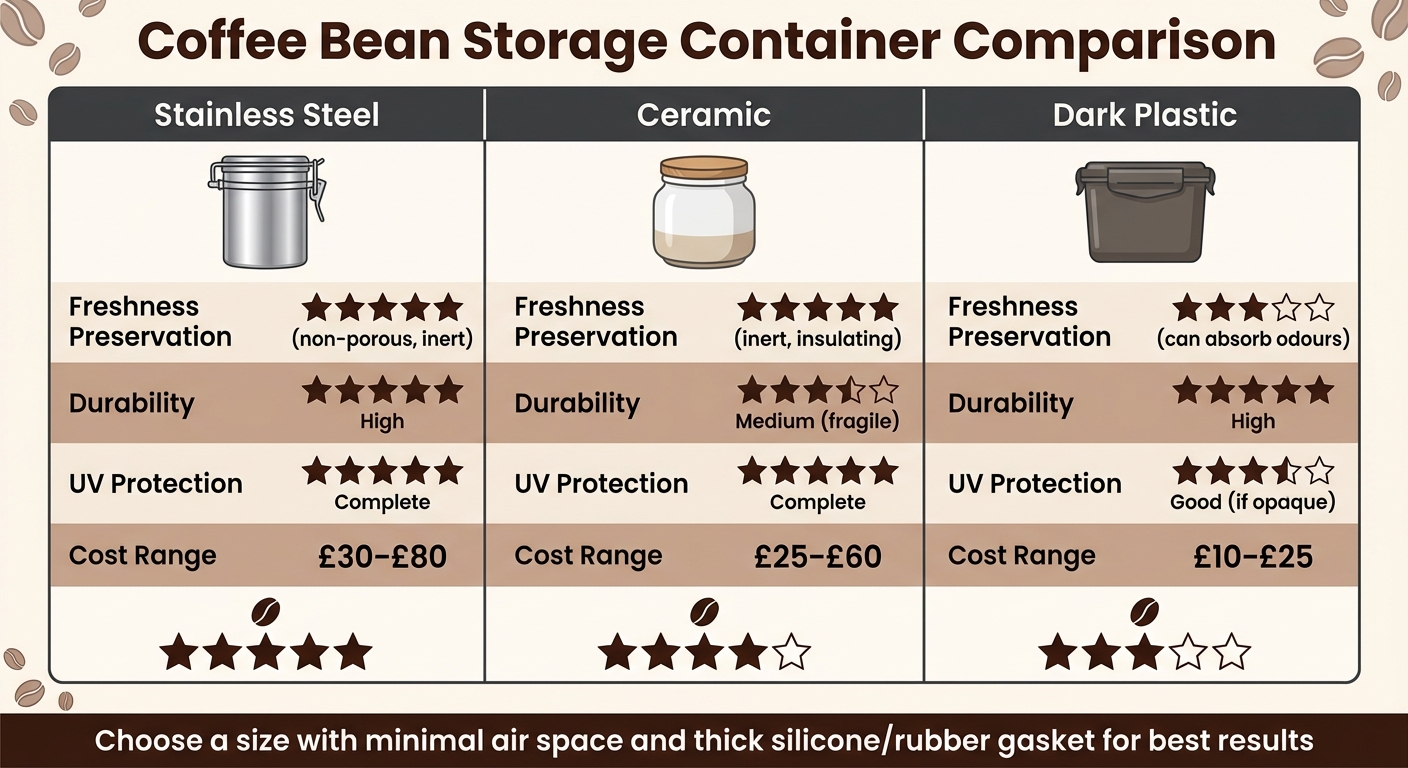
Coffee Bean Storage Container Comparison: Stainless Steel vs Ceramic vs Plastic
When it comes to keeping your coffee beans fresh, the material of your storage container is a key factor. The three most common options - stainless steel, ceramic, and dark plastic - each bring their own pros and cons to the table.
Stainless steel stands out as the most versatile choice. Its non-porous surface and ability to block UV light make it perfect for preserving freshness over the long term. Plus, it's highly durable, so you won’t have to worry about wear and tear. On the other hand, ceramic is excellent for maintaining freshness and offers great temperature insulation. However, it’s more fragile than stainless steel, which might make it less practical for some users. If you're on a budget, dark plastic is a decent option for short-term storage. That said, plastic can absorb oils and odours over time, which could affect the flavour of future batches.
"Choosing the right material is a balancing act between aesthetics, budget, and performance. For the best flavour protection, always prioritise an opaque material over a transparent one." - Seven Sisters Coffee Co
Here’s a quick comparison of these materials:
| Material | Freshness Preservation | Durability | UV Protection | Cost Range |
|---|---|---|---|---|
| Stainless Steel | Excellent (non-porous, inert) | High | Complete | £30–£80 |
| Ceramic | Excellent (inert, insulating) | Medium (fragile) | Complete | £25–£60 |
| Dark Plastic | Fair (can absorb odours) | High | Good (if opaque) | £10–£25 |
To get the best results, make sure your container has a thick silicone or rubber gasket for an airtight seal. Choose a size that leaves minimal extra air inside, and always clean the container thoroughly between batches to avoid lingering odours or oils. These small steps, combined with the right material, can make a big difference in preserving the freshness of your coffee beans.
Conclusion
By keeping your coffee beans safe from oxygen, light, heat, and moisture, you can preserve the delicate oils and aromas that make specialty coffee so appealing. In fact, proper storage can boost flavour retention by an impressive 300–400% compared to careless methods.
For ethically sourced beans with intricate flavour profiles, the risk of losing their unique characteristics - like zesty citrus notes or deep chocolate tones - is especially high if stored improperly.
"Proper storage isn't just some trivial step; it's a fundamental part of honouring the journey of the bean - from the farm right through to your kitchen" – Seven Sisters Coffee Co
Investing in a quality storage container, even one costing around £40, can protect about £150 worth of coffee each year. That’s a small price to pay for consistently great coffee.
To keep your coffee at its best, transfer beans straight into an airtight, opaque container, and store them in a cool, stable spot (15–21°C), away from heat sources like ovens or kettles and out of direct sunlight. Buy only what you’ll use within 2–4 weeks. If you prefer buying in bulk, portion the beans into weekly amounts, vacuum seal them, and freeze. Just remember: every day at -18°C equals roughly 90 days at room temperature.
FAQs
Why should coffee beans be stored in opaque containers?
To keep your coffee beans at their best, storing them in opaque containers is a must. Light exposure can break down the natural oils and aromatic compounds that give coffee its rich flavour and aroma. Using a light-blocking container helps maintain their freshness and taste for longer.
By shielding your beans from harmful UV rays, you’re ensuring that your coffee retains the same delicious quality it had on the day it was roasted.
Can freezing coffee beans help keep them fresh?
Freezing coffee beans is a smart way to keep them fresh for longer. It slows down oxidation and helps preserve those delicate flavour compounds that give coffee its unique aroma and taste. Temperature changes can have a big impact - aroma loss nearly doubles with every 10 °C increase. By storing your beans in a frozen, airtight container, you can maintain their quality for months.
Just make sure the container is properly sealed to block out moisture and odours that could compromise the flavour. When you're ready to brew, let the beans come to room temperature before opening the container. This prevents condensation, which could affect their quality.
Why shouldn’t coffee beans be stored in the fridge?
Storing coffee beans in the fridge isn't the best idea. The moisture and condensation inside can cause the beans to soak up unwanted odours, which can dull their flavour. Plus, the constant temperature changes when you take the beans in and out can mess with their quality.
For optimal freshness, place your coffee beans in an airtight container and keep them in a cool, dark cupboard, away from heat, light, and humidity. This way, they'll stay flavourful for longer.