


Bitter coffee ruining your mornings? Here’s why it happens and how to fix it:
- Main Cause: Over-extraction - brewing too long or using the wrong grind size pulls harsh compounds from the coffee.
-
Key Fixes:
- Use a coarser grind to slow extraction.
- Adjust brewing time (e.g., 4 minutes for a French press).
- Keep water temperature between 90°C–96°C.
-
Other Factors:
- Avoid stale or overly dark-roasted beans.
- Clean your equipment regularly to prevent rancid oils.
- Store beans in an airtight container, away from heat and moisture.
Why your Coffee is Sour/Bitter! (and how to fix it)
sbb-itb-cca2aed
Over-Extraction: Why Your Coffee Tastes Bitter
If your coffee tastes bitter, over-extraction is likely to blame. This happens when water draws out too many soluble compounds from the coffee grounds, leading to an unpleasant flavour profile.
In the brewing process, acids and oils are extracted first, followed by sugars, and finally the bitter compounds. When brewing continues past the ideal balance of acidity and sweetness, bitterness dominates, leaving a burnt finish and a dry aftertaste.
"Bitterness is usually a sign of over-extraction, where too much of the coffee's soluble content is pulled out. Think of it like over-steeping a teabag - you start extracting tannins and harshness instead of flavour and aroma." - The Daily Bean
Grind Size Matters
One of the key factors in avoiding over-extraction is the grind size of your coffee. If the grind is too fine, it can speed up over-extraction. Fine grounds expose more surface area to water and slow its flow, which encourages the extraction of bitter compounds.
If bitterness is a recurring issue, try adjusting your grinder to produce a slightly coarser grind. For a French press, aim for a texture similar to sea salt. If you’re using a pour-over method, a medium-fine to medium grind usually works best. Experimenting with different grind settings and using high-quality beans, such as those from Creation Coffee, can help you discover the perfect balance where the coffee’s natural sweetness shines.
Brewing Time: Keep It in Check
Brewing time also plays a critical role in preventing over-extraction. Longer brewing times allow excessive bitter compounds to be extracted. This is particularly true for immersion methods like the French press, where extraction continues until the coffee is pressed and poured.
To keep bitterness at bay, use a timer and follow these general guidelines: for a French press, aim for a 4-minute brew time (press 20–30 seconds earlier if the coffee still tastes bitter); for pour-over methods, stick to 2–3 minutes; and for espresso, aim for 25–30 seconds. If you’re using a pour-over method, speeding up your pouring can help reduce the total contact time. Finally, always decant your coffee immediately - letting it sit on the grounds or a hotplate will intensify bitterness.
Water Temperature and Its Effect on Taste
Once you've nailed down the grind size and brewing time, it's time to focus on another crucial factor: water temperature. Just like the other elements, the right temperature plays a key role in bringing out the best flavours in your coffee.
Hot water extracts flavours faster, but there's a catch: water above 96°C can dissolve unpleasant compounds too quickly. This often results in a sharp, bitter taste that some describe as 'scorching' or 'scalding'. When water is too hot, it rushes through the final stages of extraction, drawing out bitterness before the sweetness has a chance to shine. This highlights the importance of keeping a close eye on temperature throughout the brewing process.
Darker roasts, which are more delicate and soluble, tend to work better with slightly cooler water - somewhere between 90°C and 93°C. This helps avoid those overpowering ashy or smoky notes.
"The hotter the water, the more you will extract. If your coffee is tasting bitter, try lowering the temperature to extract less." – Clive Coffee
The Right Brewing Temperature
For a well-balanced cup, aim for a water temperature between 90°C and 96°C. This range helps extract the perfect mix of acids, sugars, and oils. If you don’t have a temperature-controlled kettle, you can still get it right: let your boiled water sit for about 30 seconds to 2 minutes before pouring. A digital thermometer can help fine-tune the temperature by a couple of degrees if you find your coffee tasting bitter. And here's a pro tip - avoid pouring while the water is still bubbling, as the turbulence can cause uneven extraction.
Bean Quality and Roast Levels
The quality of your coffee beans and their roast level play a huge role in shaping the flavour of your brew. Even the most precise brewing methods can't save a cup made with low-quality beans or overly dark roasts, as these often result in an unpleasant bitterness. Essentially, the beans are the backbone of your coffee’s flavour, and starting with subpar beans sets you up for disappointment.
Commodity coffee tends to be inherently more bitter than specialty-grade beans. This is because commodity beans often come with defects and higher levels of chlorogenic acid, which is responsible for 60–70% of coffee’s bitterness. Robusta beans, frequently found in cheaper blends, contain 7–10% chlorogenic acid compared to Arabica’s 5.5–8%. They also pack about double the caffeine content, which contributes to a harsher, more aggressive flavour.
The roast level is just as important. During roasting, chlorogenic acid breaks down into chlorogenic acid lactones, which add a pleasant bitterness. However, if roasting continues for too long or at excessively high temperatures, these lactones transform into phenylindanes. These compounds bring a harsh, metallic bitterness that many find unpleasant. Dr. Molly Spencer, a sensory scientist, puts it this way:
"Darker roasts tend to have more burnt and acrid flavour notes from the browning reactions during roasting, which are associated with bitterness".
At the extreme end of roasting, carbonised sugars can leave a burnt, ashy taste.
Choosing Freshly Roasted Specialty Coffee
To minimise bitterness, start with freshly roasted, specialty-grade Arabica beans. Freshness is key - coffee is at its best within 3 to 6 weeks of its roast date. As coffee ages, it loses its aromatic compounds, which are responsible for balance and sweetness. This loss amplifies the bitterness that remains.
When shopping, look for a clear "roasted on" date rather than a generic "best before" label. Hand-roasted, small-batch beans from roasters like Creation Coffee are a great choice, as they arrive at peak freshness. These beans are sourced through direct trade practices, ensuring both ethical standards and high quality. The result? Naturally sweeter, more balanced coffee without relying on dark roasts, which often need adjustments to mask their bitterness.
Avoiding Dark Roasts
If bitterness is an ongoing issue, consider moving away from dark roasts and opting for light or medium roasts instead. Light roasts highlight the natural sweetness and acidity of the beans, with almost no bitterness. Medium roasts strike a balance, offering moderate bitterness alongside enhanced sweetness. Dark roasts, on the other hand, are the most bitter, often described as smoky, ashy, or even charred.
Dark roasts are also more porous and extractable, meaning they release bitter compounds more quickly during brewing. This makes them more prone to over-extraction, even with careful brewing techniques. If you prefer darker roasts but want to reduce bitterness, try brewing with cooler water (90–93°C) and a coarser grind to slow down the extraction process.
Cleaning and Storage: Preventing Stale Flavours
Even the finest coffee beans can fall victim to bitterness if your equipment isn't clean or your storage methods are lacking. Coffee oils and residue can turn rancid over time, introducing unpleasant flavours to even the freshest brew. Beans are particularly sensitive to oxygen, light, heat, and moisture, all of which speed up oxidation and upset the delicate balance of flavours. Keeping your gear clean and storing beans properly are key to preserving great taste.
As Difference Coffee Co. puts it:
"A dirty coffee machine is one of the most common culprits; it can impart bitterness to a cup of coffee made from even the very best of beans".
Keeping Your Equipment Clean
Coffee oil build-up isn't always visible - it can hide in capsule machines, under French press plungers, and on espresso machine group heads. Over time, these oils release bitter compounds that can ruin your brew. For capsule machines, run a shot of plain water (without a pod) before brewing to flush out any lingering oils. With a French press, take it apart after each use to clean trapped grounds in the mesh, as they can break down and release tannins.
Grinders need attention too. If you're using dark, oily roasts, clean your grinder weekly. For lighter roasts, every two weeks should suffice. Espresso machines require regular backflushing with detergent and daily cleaning of the portafilter and group head with hot water. Once a month, give your coffee maker a thorough clean using either a vinegar-water mixture or a specialised descaling solution.
Storing Beans Correctly
Proper storage is just as important as cleaning. Use an airtight container and keep your beans in a cool, dark place, far from direct sunlight or heat sources. Avoid storing coffee in the fridge or freezer for daily use - moisture can make beans clump and absorb odours from nearby food. Coffee beans are hygroscopic, meaning they readily soak up moisture and odours, which can ruin their flavour.
To enjoy the best taste, use your beans within three to six weeks of their roast date. Pre-ground coffee loses freshness much faster due to its larger surface area, so grind only as much as you need right before brewing.
Troubleshooting: Fixing Common Bitterness Problems
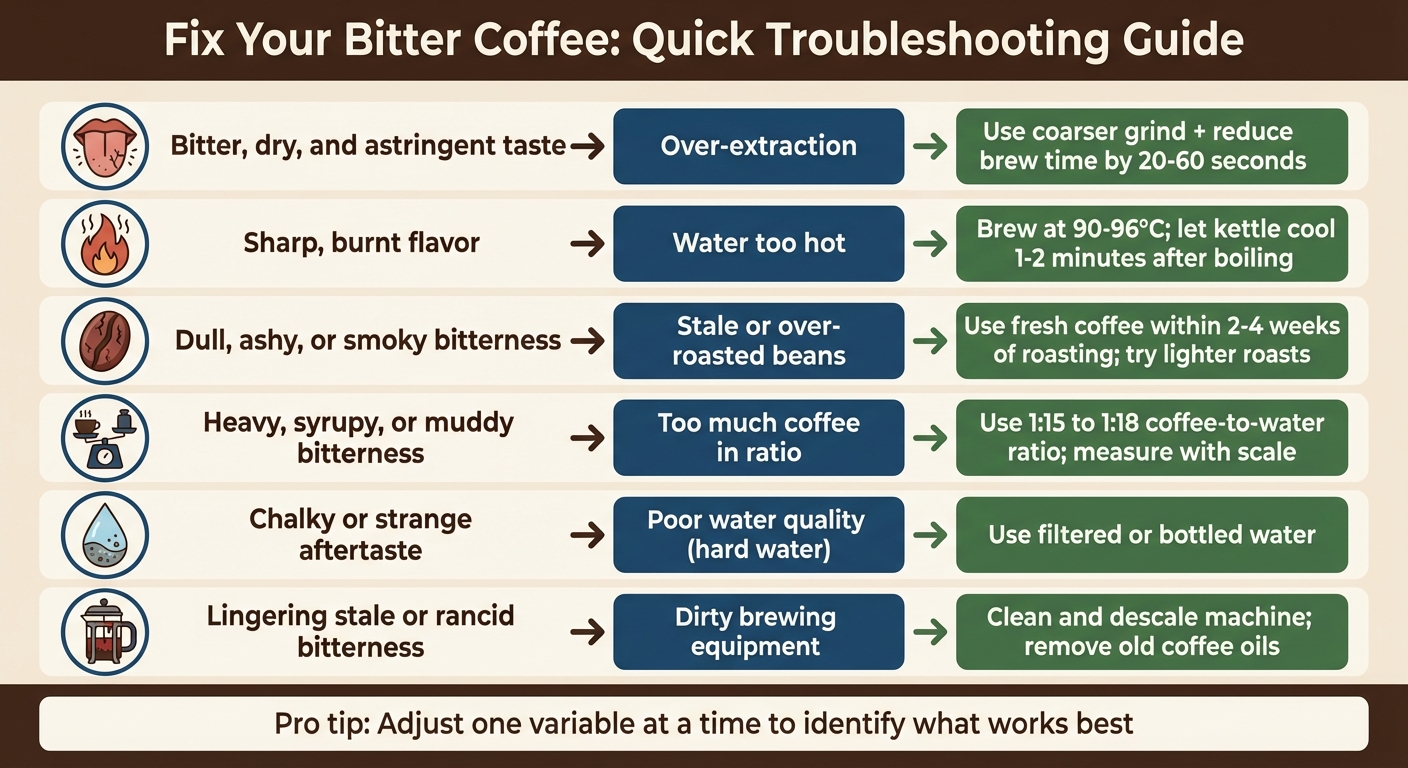
Coffee Bitterness Troubleshooting Guide: Causes and Solutions
If your coffee tastes bitter, it might be due to a few brewing missteps. Here's how to identify the issue and make adjustments to improve your brew.
Different types of bitterness can signal specific problems. For example, a dry, astringent bitterness usually means over-extraction, while sharp, burnt flavours often result from water that's too hot. Dull, ashy notes may point to stale or over-roasted beans, and a rancid, lingering bitterness can indicate unclean equipment.
Michael Phillips, Director of Training at Blue Bottle Coffee and a World Barista Champion, puts it this way:
"The dose of ground beans that you use to make a cup of coffee only has so much goodness inside of it. If we try to take too much out of it... bitterness comes along for the ride".
Use the table below to troubleshoot common bitterness problems and find solutions.
Bitterness Troubleshooting Table
| Symptom | Likely Cause | Recommended Solution |
|---|---|---|
| Bitter, dry, and astringent taste | Over-extraction | Use a coarser grind and reduce brew time by 20–60 seconds |
| Sharp, burnt flavour | Water temperature too high | Brew at 90–96°C; let the kettle cool for 1–2 minutes after boiling |
| Dull, ashy, or smoky bitterness | Stale or over-roasted beans | Use fresh coffee within 2–4 weeks of roasting; try lighter roasts |
| Heavy, syrupy, or "muddy" bitterness | Too much coffee in the ratio | Use a 1:15 to 1:18 coffee-to-water ratio; measure with a scale |
| Chalky or strange aftertaste | Poor water quality (hard water) | Use filtered or bottled water |
| Lingering stale or rancid bitterness | Dirty brewing equipment | Clean and descale your machine; remove old coffee oils |
To fine-tune your brew, adjust one variable at a time. This way, you can zero in on what works best.
Conclusion
Say goodbye to bitter coffee by getting the extraction process just right. Bitterness often comes from over-extraction - when water pulls out too many harsh compounds from the coffee grounds. To fix this, try adjusting your grind size, cutting the brew time by 30–60 seconds, and keeping your water temperature between 90°C and 96°C. Remember, the quality of your beans and your brewing technique are just as important. Fresh, speciality-grade coffee, used within 3–6 weeks of roasting, naturally delivers more sweetness and complexity compared to stale or over-roasted beans. If dark roasts are causing unwanted bitterness, consider switching to light or medium roasts, which better showcase the bean's natural flavours.
Don’t overlook your equipment and storage habits. Dirty gear can lead to rancid oils and unpleasant flavours, so keep everything clean. If your tap water is hard, filtered water might improve the taste. Store your coffee beans in an airtight container, away from light and moisture, to preserve their freshness. Make these changes one step at a time to discover the perfect cup for your taste.
FAQs
How do I know if my coffee beans are no longer fresh?
You can tell your coffee beans have lost their freshness when they no longer have that strong, rich aroma or if your brewed coffee tastes flat and uninspiring. Fresh beans should fill the air with a vibrant fragrance and deliver a bold, flavour-packed cup.
Another clue lies in their appearance. Fresh beans often have a slightly shiny, oily surface, while stale ones tend to look dry and dull. To keep your coffee at its best, store your beans in an airtight container, away from heat, light, and moisture. Aim to use them within a few weeks of buying for the best flavour.
What is the best grind size for different coffee brewing methods?
The grind size of your coffee beans is a game-changer when it comes to flavour. Picking the right grind for your brewing method can make all the difference in avoiding that unpleasant bitterness.
- Coarse grind: Ideal for a French press or cold brew. The larger particles ensure you don’t end up with over-extracted coffee during the longer brewing times these methods require.
- Medium grind: Best suited for drip coffee makers and pour-over methods. This size strikes a good balance, delivering a smooth cup without leaning too bitter or sour.
- Fine grind: Perfect for espresso. A finer grind allows for the quick, even extraction needed for this method. Just be careful - go too fine, and you might tip into over-extraction, which brings out unwanted bitterness.
Don’t be afraid to tweak your grind size slightly to match your brewing style and taste preferences. Small adjustments can lead to big flavour improvements!
Why is the right water temperature important when brewing coffee?
The temperature of the water is a crucial factor in determining the flavour of your coffee. If the water is too hot - anything over 96°C - it can pull out bitter, unpleasant notes from the coffee grounds. On the flip side, water that's too cool won't extract enough, leaving your coffee tasting flat and weak.
To get the best flavour, stick to a water temperature between 90°C and 96°C. This range allows for a balanced extraction, highlighting the coffee's natural sweetness and depth without introducing any harshness. A thermometer or a temperature-controlled kettle can make it easier to consistently hit this ideal range.