


Washed coffee is coffee with the fruit removed before drying, which usually gives you a cleaner cup, brighter acidity, and a lighter body. I’d put it simply like this: if you want clearer flavour, sharper notes like citrus or florals, and a brew that shows where the coffee was grown, washed coffee is often the style to look for.
Here’s the short version:
- How it’s made: the cherry is pulped, the sticky mucilage is broken down in fermentation tanks for about 12–72 hours, then the beans are washed and dried.
- How it tastes: often clean, bright, floral, citrus-led, with a lighter mouthfeel than natural coffee.
- How it differs: washed coffee has less fruit contact during drying than honey or natural coffee, so the cup is usually less syrupy and more precise.
- Why people buy it: it can show origin, variety, and altitude more clearly.
- What to watch: wet processing can use a lot of water - in some mills, up to 40 litres per kg of parchment coffee - unless lower-water systems are used.
- How to brew it: I’d start with 15 g coffee to 250 ml water at 92–96°C, especially for pour-over or AeroPress.
- What to check on the bag: look for washed, wet processed, or fully washed, plus the roast date, origin, and producer details.
If you’re comparing processing styles, this is the quickest way I’d frame it:
| Method | Fruit left on bean while drying | Usual taste | Body |
|---|---|---|---|
| Washed | Very little | Clean, bright, more defined | Light to medium |
| Honey | Some mucilage left | Sweeter, rounder | Medium |
| Natural | Whole cherry left on | Fruity, wine-like, syrupy | Heavy |
Bottom line: if you like coffee that tastes crisp rather than jammy, washed coffee is probably the better pick for you.
Washed Process Coffee - Step-by-Step Guide
If you're looking to taste the results of this process, you can explore our range of freshly roasted specialty coffee available for delivery.
sbb-itb-cca2aed
How washed coffee is processed, step by step
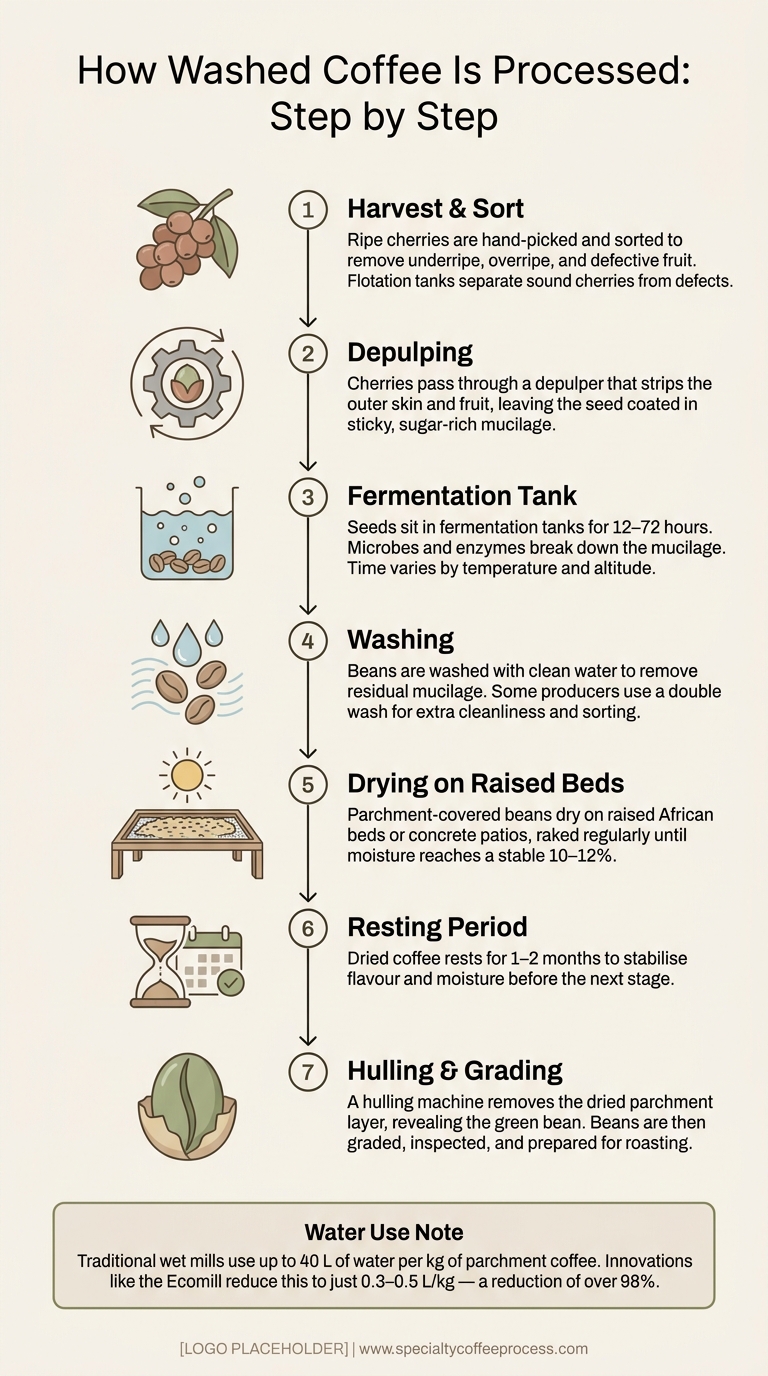
How Washed Coffee Is Processed: Step-by-Step Guide
Harvesting, sorting and pulping
Picked cherries are sorted to remove underripe, overripe and defective fruit before pulping. Flotation tanks help separate sound cherries from defects before pulping.
Soon after harvest, the cherries pass through a depulper. This machine strips away the outer skin and fruit. What’s left is the coffee seed, still covered in a sticky, sugar-rich layer called mucilage. After that, the coffee moves into fermentation, where this layer is broken down.
Fermentation, washing and drying
The seeds go into fermentation tanks, where microbes and enzymes break down the mucilage. This stage usually takes 12 to 48 hours, depending on ambient temperature and altitude.
Done well, fermentation helps keep the bean’s own flavour in place while removing the mucilage. That’s a big part of why washed coffees often taste clean and well defined.
Once fermentation is complete, the beans are washed with clean water to remove the last of the residue. In some regions, producers use a double wash for extra cleaning and sorting.
The parchment-covered beans are then dried on raised African beds or concrete patios. They’re raked and turned on a regular basis to prevent mould and help the moisture drop evenly, until they reach a stable moisture content of 10–12%. At that point, the coffee is dry, but it still needs time to settle before hulling.
Resting, hulling and preparing for roasting
After drying, the coffee rests before the parchment is removed. This resting period lasts one to two months, helping stabilise flavour and moisture before the next stage.
The dried parchment layer is then removed by a hulling machine, which reveals the green coffee bean underneath. After that, the beans are graded, inspected and prepared for roasting. That steady, controlled process is a big reason washed coffees are known for their clear, origin-led character.
What washed coffee tastes like and how to brew it
Typical flavour notes and mouthfeel
Because the fruit comes off before drying, washed coffee often tastes cleaner and more tied to where it was grown. In the cup, that can mean notes like lemon, lime, bergamot, jasmine, orange blossom, white peach or apricot, followed by a light, tea-like finish.
The body is usually light to medium. Acidity tends to be bright and well-shaped, rather than heavy or stewed. That clean profile is a big part of why washed coffees work so well for precise brewing.
Brewing methods that work well with washed coffees
With washed coffees, small brewing changes show up fast in the cup. That’s why method matters a bit more here.
Pour-over is a strong fit for washed coffee at home. The slow, controlled extraction helps the cup stay clear and lets the origin character stand out. AeroPress also works well if you want a clean, focused result. For filter brewing, use 15 g of coffee to 250 ml of water, with water heated to 92°C to 96°C.
If you’re brewing a lighter roast, aim for 94°C to 96°C. That helps pull out more of the layered acids and floral notes. Lighter roast washed coffees can also shine as espresso, giving you a clean, structured shot.
How roast level changes the cup
Roast level shapes how much of that clarity stays in the final brew. Since this process puts more attention on the bean itself, the roaster’s decisions are easier to notice than they are with other processing styles.
Lighter roasts usually keep the sparkling acidity, floral aromas and citrus notes that set washed coffees apart. Go a bit darker and you can bring in more sweetness and body, while softening the sharper edges without stripping away the coffee’s brightness. As George Howell, founder of George Howell Coffee, explains:
"What I love about washed coffees is that they can have pure intrinsic flavours from the bean, if the washing is done properly."
Roast development should add sweetness without flattening acidity.
Why washed coffee is popular in specialty coffee
Clarity, consistency and origin character
That clean cup profile is a big reason washed coffee shows up so often in specialty lots. Washed coffee is popular in specialty coffee because it brings out origin character and gives roasters a more repeatable profile. In the cup, that means origin, variety and altitude tend to come through with more definition.
Different origins show this style in different ways, from Kenya's acidity to Ethiopia's florals and Colombia's citrus-led structure. For roasters, that makes washed coffee a dependable way to show terroir without heavy processing notes masking what makes each coffee distinct.
It is also easier to control than natural drying, so roasters can get a repeatable cup profile - something they rely on when building a steady range.
Water use, wastewater and responsible processing
The clean profile washed coffee offers comes with a real cost in water use. Traditional wet mills can use up to 40 litres of water per kilogram of parchment coffee. The wastewater, often called honey water, is high in organic matter and can damage waterways if it is not treated.
Producers who handle this well usually invest in water recirculation systems, treatment lagoons and demucilaging machinery. Innovations like the Ecomill, developed by Cenicafé in Colombia, can cut water use from 40 litres down to just 0.3–0.5 litres per kilogram of parchment coffee. More broadly, demucilaging machines have been shown to reduce water consumption by up to 80% compared with standard fermentation tanks.
Washed coffee gives roasters clarity and consistency, but it also asks more from producers in terms of water use and wastewater control than natural processing. When that side of the work is done properly, producers can keep the clean profile of washed coffee without harming local water systems.
How ethical sourcing connects to the final cup
Responsible wet processing is not cheap. Eco-pulpers, fermentation tanks and wastewater treatment systems all take money to buy, run and maintain. That is why the link between roasters and producers matters so much. When farmers are paid fairly through direct trade, they are in a better position to maintain and improve that setup, and that feeds straight into cup quality.
Fair pricing also gives producers a reason to keep pushing on quality. Better returns for higher-grade coffee make it more likely that they will invest in selective hand-picking, careful fermentation monitoring and steady drying - the small decisions that shape what ends up in your cup.
Fair pricing gives producers the cash flow to look after processing infrastructure and improve it over time, which supports cup quality. For buyers, those same choices often appear on the label as origin, process and roast level.
Choosing washed coffee at home
What to look for on the label
Once you know how washed coffee tends to taste, the label does a lot of the heavy lifting before you even open the bag. Look for "washed", "wet processed," or "fully washed". Any of these tells you the coffee was processed this way.
Then check the rest of the details: origin, producer or co-operative, altitude, variety, and roast date. Those bits help you judge what kind of cup you’re likely to get. You may also see tasting notes such as floral, citrus-led acidity, apple and caramel notes.
The roast date matters because freshness affects the clarity and brightness that make washed coffees stand out. It also helps to buy a bag size you can finish while the coffee is still fresh.
Storage and buying options for fresher coffee
Freshness matters because washed coffees can lose their clarity fast once ground. That’s why whole beans are the better pick. Grind them just before brewing, and you’ll keep more of what makes the coffee taste sharp and clean. Pre-ground coffee, by comparison, fades sooner.
For storage, keep beans in an airtight container in a cool, dry place away from direct light.
If you want coffee closer to the roast date without having to think about reordering, a subscription can help. Creation Coffee offers freshly roasted single-origin coffees and blends delivered to UK homes, to keep coffee fresh.
Conclusion: the key points about washed coffee
Washed coffee is wet processed, which is why the label, roast date, and storage all matter. Choose fresh, well-labelled beans from responsible producers, and store them with care. That’s where the clarity and origin character of washed coffee begin and end.
FAQs
Is washed coffee more acidic?
Yes, washed coffee is usually more acidic than coffee made with natural or honey processing.
When the fruit skin and mucilage are removed before drying, the bean’s own character comes through more clearly. The result is often a cleaner cup with brighter acidity, often described as crisp, citrus-like, or floral.
Does washed coffee suit espresso?
Yes, washed coffee works very well for espresso. Because the fruit and mucilage are removed before drying, the beans tend to have clearer flavour, bright acidity, and a more defined body.
The result is a clean, bright espresso that shows off the bean’s origin and varietal with much more precision.
Why does washed coffee use so much water?
Washed coffee uses a lot of water because producers need it to remove the sticky, sugary mucilage from the beans. In most cases, they ferment the beans in water and then use clean water to rinse off what’s left.
Water also plays a part in quality control. It moves the coffee through channels, which lets producers sort beans by density.