


Coffee tastes vary greatly depending on where it's grown. Factors like altitude, soil, climate, and processing methods all shape the flavour. For example, Ethiopian coffee often has floral and citrusy notes, while Brazilian coffee leans towards chocolate and nutty tones. Here's the key to understanding these differences:
- Altitude: Higher elevations produce beans with brighter, fruitier flavours, while lower altitudes yield smoother, sweeter profiles.
- Processing: Washed coffees are clean and bright; natural processing creates sweeter, fruit-forward cups; honey processing balances sweetness with clarity.
- Roast Levels: Light roasts preserve floral and fruity notes, medium roasts balance natural flavours with caramel tones, and dark roasts bring out smokier, bitter flavours.
-
Regional Profiles:
- Africa: Bright, floral, and fruity (e.g., Ethiopian Yirgacheffe).
- Central/South America: Balanced with chocolate and nutty tones (e.g., Colombian or Brazilian coffee).
- Asia/Pacific: Earthy, herbal, and full-bodied (e.g., Sumatran coffee).
To enjoy these flavours at home, match brewing methods to the coffee's origin. For instance, pour-over suits light African coffees, while a cafetière enhances the richness of Brazilian or Indonesian beans. Ethical sourcing also plays a role, ensuring fair pay for farmers and better quality beans in your cup.
Coffee Flavours by Country: Why Origin Changes the Taste
sbb-itb-cca2aed
What Shapes Coffee Flavour
The flavour of coffee is influenced by a combination of factors, including where it is grown, how it is processed after harvest, and the methods used to roast and brew the beans.
Geography and Climate
Altitude plays a major role in determining coffee's flavour. At higher elevations - generally above 1,500 metres - cooler temperatures slow the ripening of coffee cherries. This extended growth period results in denser beans with complex sugars and acids, producing cups with brighter, fruitier, and more layered flavours.
Soil composition also makes a difference. For instance, volcanic soils, like those found in Guatemala and Ethiopia, contribute to vibrant floral notes. Coffee is primarily grown in the "Coffee Belt", a region located between the Tropics of Cancer and Capricorn. This area offers ideal growing conditions with temperatures between 15°C and 25°C, along with consistent rainfall.
| Altitude (masl) | Typical Flavour Notes | Regional Examples |
|---|---|---|
| Above 1,800m | Floral, citrus, bright acidity | Ethiopia (Yirgacheffe), Colombia (Nariño) |
| 1,500–1,800m | Berry, stone fruit, spice | Kenya, Guatemala (Huehuetenango) |
| 1,200–1,500m | Vanilla, chocolate, citrus | Costa Rica, Nicaragua |
| 900–1,200m | Sweet, smooth, caramel | Brazil, Mexico |
| Below 900m | Mild, soft, earthy | Brazil (lowlands), Vietnam (Robusta) |
Processing Methods
How coffee cherries are processed after harvest has a huge impact on the final flavour profile.
- Washed (wet) processing: The fruit is removed before fermentation, resulting in a clean and bright cup that highlights the bean's origin. This method is widely used in regions like Kenya, Ethiopia, Rwanda, Colombia, and parts of Central America.
- Natural (dry) processing: The whole cherry is dried in the sun, allowing sugars from the fruit to infuse into the bean. This creates a heavier body with intense berry or tropical fruit notes. It's a common method in Brazil and some Ethiopian regions.
- Honey processing: This method involves removing the skin but leaving some of the sticky mucilage during drying. The result is a sweeter cup with more clarity than natural processing. Costa Rica is particularly known for this approach.
Each method produces distinct flavour characteristics. Washed coffees are often described as clean and bright, while natural coffees tend to have a sweeter, more fruit-forward profile due to the retained sugars.
Roast Levels and Brewing Styles
Roasting is the step that transforms green coffee beans into the freshly roasted coffee beans ready for brewing. The roast level can either enhance or overshadow the flavours shaped by the bean's origin and processing.
- Light roasts: These preserve the delicate floral and fruity notes, particularly in high-altitude African coffees.
- Medium roasts: Striking a balance, these highlight both the bean's natural flavours and the caramel or chocolate tones that develop during roasting.
- Dark roasts: These often emphasise bitterness and smokiness, which can mask the bean's original flavours.
The brewing method you choose also influences the final cup. In the UK, the cafetière (French press) works well with dark-roasted Brazilian or Sumatran beans, enhancing their earthy depth and heavy body. The AeroPress pairs beautifully with medium-roast Colombian beans, balancing sweetness and acidity. For light-roasted Ethiopian coffees, filter methods like the V60 or Chemex are ideal, as they allow the delicate floral notes to stand out.
Coffee Flavour Profiles by Region
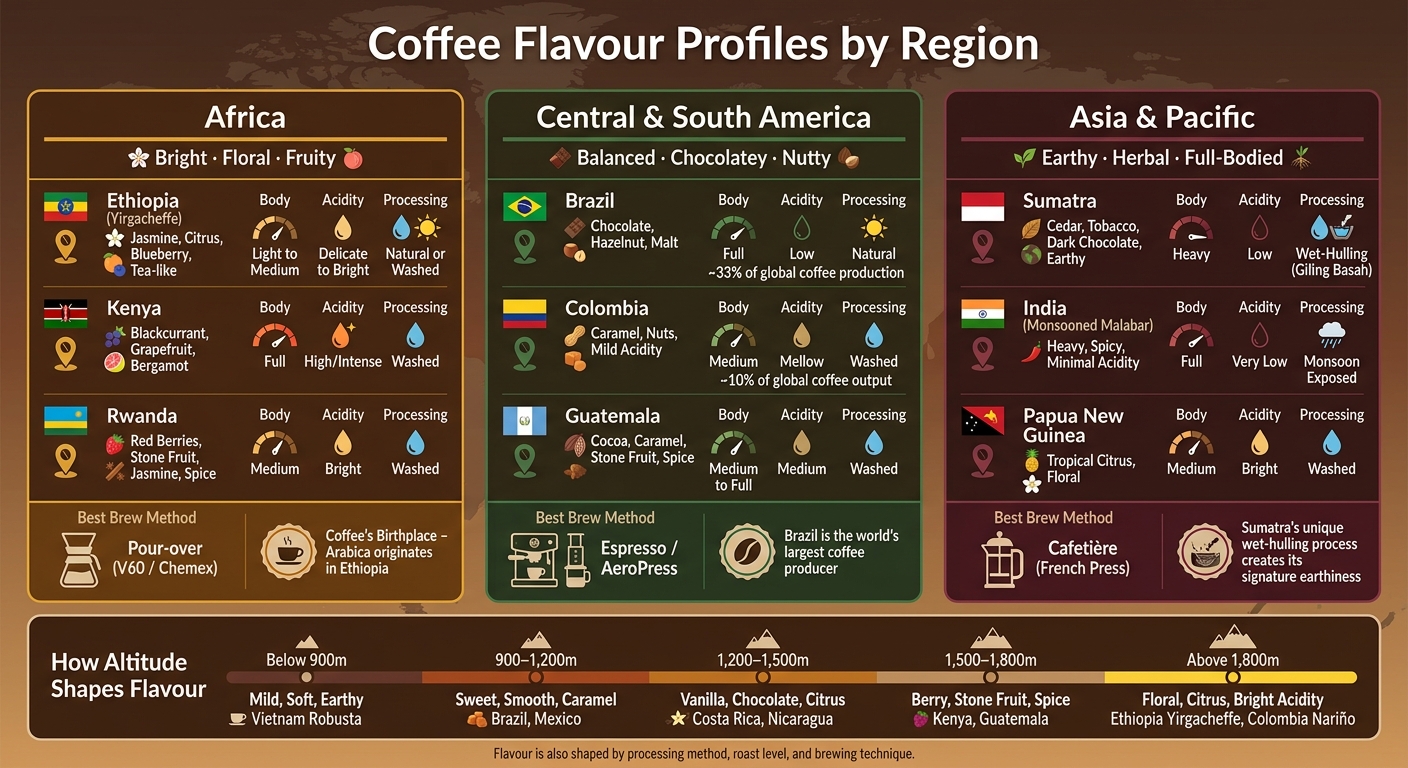
Coffee Flavour Profiles by Region: Africa, Americas & Asia-Pacific
Geography, processing methods, and roasting styles all contribute to the unique flavour profiles of coffee. Below, you'll find an overview of the distinct characteristics from some of the world's most renowned coffee-growing regions.
African Coffees
Africa, often regarded as coffee's birthplace, is home to some of the most intricate and vibrant flavour profiles. Ethiopia, where Arabica coffee originates, is particularly notable. Coffees from Yirgacheffe are known for their jasmine and citrus notes, while Harrar offers a fruit-forward, wine-like flavour. Sidamo strikes a balance with its mix of fruity and spicy tones, underpinned by a bright acidity.
Kenyan AA coffee, cultivated at elevations above 1,500 metres, is celebrated for its bold, "juicy" character. With hand-picked cherries ensuring quality, these beans deliver flavours of blackcurrant, grapefruit, and bergamot. Rwandan coffee, meanwhile, bridges the gap between Ethiopia's floral elegance and Kenya's fruitiness, often with subtle hints of spice and stone fruit.
| Country | Primary Flavour Notes | Body | Acidity | Common Processing |
|---|---|---|---|---|
| Ethiopia (Yirgacheffe) | Jasmine, citrus, blueberry, tea-like | Light to Medium | Delicate to Bright | Natural or Washed |
| Kenya | Blackcurrant, grapefruit, bergamot | Full | High/Intense | Washed |
| Rwanda | Red berries, stone fruit, jasmine, spice | Medium | Bright | Washed |
Central and South American Coffees
Coffees from Central and South America are known for their balance and approachability. Brazil, the world's largest coffee producer, contributes about 33% of global coffee production. Brazilian beans are favoured in espresso blends for their low acidity, full body, and comforting notes of chocolate, hazelnut, and malt.
Colombia, which accounts for roughly 10% of global coffee output, is another standout. As coffee expert Meister explains:
"The classic Colombian profile blends mellow acidity with a strong caramel sweetness and a nutty undertone." - Meister, Coffee Expert
Colombian coffee is versatile, equally delightful on its own or with milk. Guatemala, with its high-altitude farms and volcanic soil, offers a more complex profile. Expect medium-to-full-bodied cups with flavours of cocoa, caramel, stone fruit, and a unique spiced finish. These profiles contrast sharply with the bold, earthy coffees from Asia and the Pacific.
Asian and Pacific Coffees
Asian and Pacific coffees showcase some of the most distinctive flavour profiles in the coffee world. Sumatran beans are particularly notable for their deep, earthy character, with notes of cedar, tobacco, and dark chocolate. This profile is shaped by Indonesia's Giling Basah (wet-hulling) process.
Java coffee shares some similarities with Sumatra but leans towards chocolate and herbal tones. Indian Monsooned Malabar, processed by exposing beans to monsoon winds, creates a heavy, spicy cup with minimal acidity.
Papua New Guinea (PNG) offers a brighter, fruitier alternative to its Indonesian neighbours. Grown in volcanic soils, PNG coffees often feature tropical citrus and floral notes, making them ideal for pour-over brewing. For those seeking a gentler profile, PNG provides a refreshing contrast to the intense flavours of Sumatra and Java.
How to Explore Regional Coffee Flavours at Home
Building on the regional flavour profiles discussed earlier, here’s how you can dive into these distinct coffee experiences without leaving your kitchen.
Matching Brew Methods to Coffee Origins
The way you brew your coffee can have a big impact on how the flavours come through. Different coffee origins often shine best with specific brewing methods, so pairing them thoughtfully can elevate your experience.
For East African coffees, like Ethiopian Yirgacheffe or Kenyan AA, known for their bright and floral notes, a pour-over method (V60 or Chemex) is ideal. The paper filters in these methods remove oils and sediment, enhancing clarity and highlighting the coffee's aromatic qualities. On the other hand, if you’re brewing full-bodied, chocolatey coffees from Brazil or Indonesia, a cafetière (French press) is a better fit. Its metal filter retains the natural oils, giving you the rich and heavier texture these beans are prized for.
For low-acid, nutty, or caramel-forward coffees from regions like Colombia or Brazil, espresso is a great choice. This method concentrates the coffee’s body and sweetness while keeping any harshness in check. A handy tip: use light to medium roasts for filter brewing and darker roasts for espresso to get the best results.
Tasting and Recording Coffee Flavours
Tasting coffees side-by-side is one of the best ways to appreciate the unique characteristics of different regions. For example, brew an Ethiopian natural and a Colombian washed coffee on the same day, and you’ll immediately notice the contrast - one is jammy and fruit-driven, while the other is clean with caramel sweetness.
To make the most of your tasting, follow this simple four-point framework:
- Aroma: Smell the dry grounds, then again after adding hot water.
- Acidity: Is it bright and citrusy or softer and more wine-like?
- Body: Does it feel light and tea-like or heavy and syrupy in the mouth?
- Aftertaste: Does the flavour linger? If so, how does it evolve?
For help putting words to what you’re tasting, the SCA (Specialty Coffee Association) Flavour Wheel is an excellent resource. It offers a wide range of descriptors, from floral notes like bergamot and jasmine to earthy tones like cedar and tobacco, making it easier to describe your coffee experience.
Ethical Sourcing and Its Impact
The story behind your coffee matters just as much as its flavour. Shockingly, around 44% of coffee farmers globally live in poverty, and they only receive 7–10% of the retail price of a bag of coffee. When roasters pay fair prices and work directly with farmers, it empowers producers to reinvest in their farms, improve their processes, and ultimately grow better coffee. This, in turn, enhances the distinctive flavours in your cup.
"Empowered farmers produce beans with cleaner sweetness, brighter acidity, and distinct profiles." - Steel Oak Coffee
This is why direct trade is so important. Instead of relying on commodity markets, direct trade roasters build long-term relationships with specific farms, ensuring both high quality and fair compensation. For instance, Creation Coffee takes this approach seriously, sourcing single-origin beans ethically through direct trade. They even donate 10% of their profits to a children’s charity, so every bag you purchase supports a cause beyond just coffee.
Conclusion
Every cup of single-origin coffee tells a story - its origin, processing, and roast all come together to create something special. The concept of terroir plays a big role here, with each coffee reflecting the unique characteristics of where it was grown. From the complexity of high-altitude beans to the simplicity of lowland varieties, every detail, including processing methods and roast levels, shapes the final flavour.
Regional differences become clear when you dive into single-origin coffee. African coffees (like those from Ethiopia and Kenya) are known for their floral notes, citrusy brightness, and berry-like flavours. Central and South American coffees (such as Colombia, Brazil, and Guatemala) often deliver a balanced profile with hints of chocolate, caramel, and nuts. Meanwhile, Asian and Pacific coffees (Sumatra, India) take a different path altogether, offering earthy, herbal tones with a full body and low acidity. These flavours are deeply tied to the traditions and landscapes of their origins.
Beyond the taste, single-origin coffee represents a dedication to ethical and sustainable practices. Choosing ethically sourced, artisan coffee means supporting fair compensation and direct trade, which not only enhances flavour but also promotes sustainability. For example, Creation Coffee sources its beans through direct trade and hand-roasts them in small batches. This careful process allows the unique character of each origin to shine while supporting the farmers behind the beans. So, why not explore these thoughtfully sourced coffees and experience the world in every sip?
FAQs
How can I tell a coffee’s origin by taste?
Coffee often carries distinct flavour profiles that hint at its origin, shaped by factors such as geography, climate, altitude, and processing techniques. For example, coffees from Brazil are renowned for their chocolatey and nutty notes, paired with a mellow acidity. On the other hand, Ethiopian coffees are celebrated for their vibrant, floral flavours. While these regional traits offer useful clues, variations can arise depending on individual farms and their unique methods. Tasting and paying attention to specific flavour nuances is crucial for pinpointing a coffee's origin.
Which processing method should I choose for sweeter coffee?
For those who prefer their coffee on the sweeter side, the natural processing method is a great option. This approach brings out the coffee's natural sugars, creating a flavour profile that leans towards sweetness and fruity notes. It's a favourite among coffee lovers who enjoy vibrant and fruity flavours in their cup.
What’s the best brew method for each region?
The ideal brewing method often depends on the coffee's flavour profile. Coffees with bright, floral notes - like those from Ethiopia - are best suited to pour-over or filter brewing. These methods help maintain the clarity of the coffee’s delicate flavours. On the other hand, rich, chocolatey coffees from regions such as Brazil or Colombia shine with espresso or French press brewing, which emphasise their body and smooth texture. For coffees with intense or savoury profiles, like those from Kenya, AeroPress or pour-over methods offer greater control, allowing you to bring out their distinctive regional qualities.