


Proper coffee packaging is the unsung hero of your morning brew. It protects roasted beans from oxygen, moisture, light, and heat - factors that quickly degrade flavour and aroma. Without the right packaging, even the finest beans can lose their quality within days. Key features like one-way valves, multi-layer materials, and resealable zippers are not just design choices - they’re critical for keeping coffee enjoyable for longer.
Here’s what matters most:
- Oxygen: Causes oxidation, dulling flavour within hours of exposure.
- Moisture: Dilutes oils and promotes mould growth.
- Light: Breaks down oils, leading to rancidity.
- Heat: Doubles flavour loss for every 10°C increase.
Modern packaging, such as aluminium-lined bags with one-way valves, extends shelf life by controlling these threats. Options like vacuum sealing or nitrogen flushing further protect beans. For consumers, features like resealable bags and clear roast dates ensure better storage and transparency. However, balancing freshness with eco-conscious materials remains a challenge, with recyclable and biodegradable solutions gaining ground.
Packaging isn’t just about preservation - it shapes the entire coffee experience, from flavour to trust in the brand.
How To Store Coffee Beans - Vacuum Container or Zip Bag?
sbb-itb-cca2aed
What Threatens Coffee Freshness
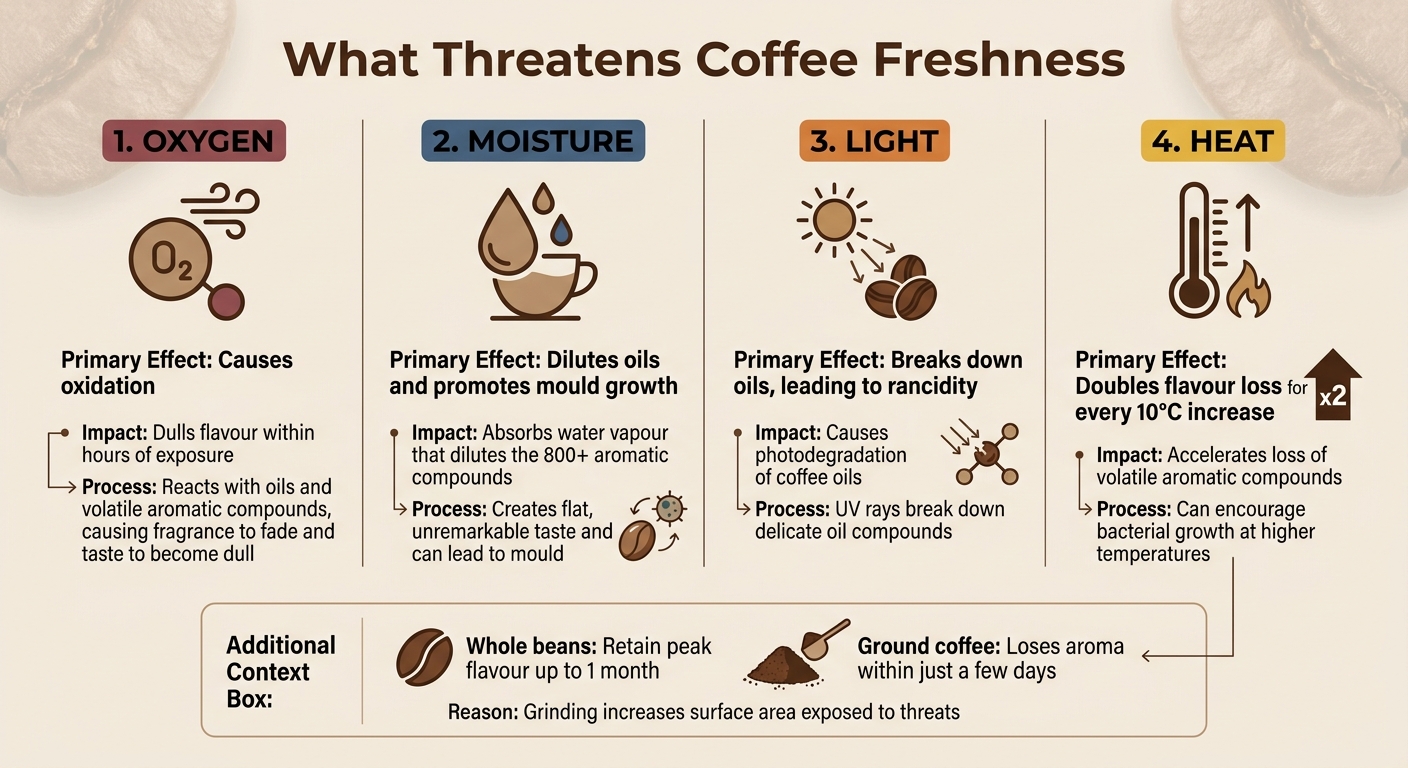
Four Threats to Coffee Freshness and Their Impact
Once coffee beans are roasted, they face four main enemies: oxygen, moisture, light, and heat. These factors work against the beans by breaking down the oils, aromatic compounds, and flavour molecules that make your coffee so enjoyable. This is why packaging does more than just hold the beans - it acts as a shield to protect them from these harmful elements. Let’s break down how each of these threats impacts coffee quality.
The rate of deterioration depends on whether you’re storing whole beans or ground coffee. Ground coffee is far more vulnerable because grinding increases the surface area exposed to the environment. While whole beans can retain their peak flavour for up to a month, ground coffee often loses its aroma within just a few days. This rapid decline is a key reason why roasters put so much thought into packaging.
How Oxidation Affects Coffee Flavour
Oxidation occurs when oxygen reacts with the compounds in roasted coffee, particularly the oils and volatile aromatic compounds that give coffee its flavour and aroma. Once oxygen gets inside the beans, it speeds up the breakdown of these delicate components, causing the coffee’s fragrance to fade and its taste to become dull.
This process begins almost immediately after a bag of coffee is opened. Within hours, oxygen starts to oxidise the oils, diminishing the coffee’s quality. Freshly roasted coffee releases carbon dioxide (CO₂), which initially acts as a protective barrier against oxygen. However, as the CO₂ dissipates, oxygen can penetrate deeper into the beans. This is why many coffee bags feature one-way valves - they let CO₂ escape without letting oxygen in, helping to preserve the coffee’s flavour for longer. Next, let’s see how moisture can also harm your coffee.
How Moisture Damages Coffee
"Moisture is equally destructive, forcing beans to absorb moisture that dilutes oils and accelerates staleness." - The Coffee Factory
When coffee beans are exposed to humid conditions, they absorb water vapour. This dilutes the oils that contribute to the coffee’s flavour and aroma, leaving you with a brew that tastes flat and unremarkable. Coffee’s complex flavour comes from a mix of oils, acids, and over 800 aromatic compounds, all of which are highly sensitive to moisture.
Moisture doesn’t just affect flavour - it can also lead to mould growth and weaken the beans’ structure. Storing coffee in the fridge may seem like a good idea, but it’s actually harmful. The high-moisture environment causes condensation every time the container is opened, which quickly ruins both the taste and the safety of the coffee. To combat this, packaging needs to include materials with low Water Vapour Transmission Rates (WVTR), such as foil-laminated bags, which offer excellent protection. Light and heat, however, bring their own set of challenges.
How Light and Heat Reduce Coffee Quality
Exposure to light - whether from the sun or artificial sources - causes photodegradation, breaking down the oils in coffee and leading to rancidity. Even basic kraft paper bags can let light through, which is why high-quality packaging often includes opaque barriers like aluminium or Mylar linings.
Heat is another major threat. The higher the temperature, the faster coffee loses its volatile aromatic compounds. In fact, for every 10°C increase in storage temperature, the rate of flavour degradation doubles. Heat not only speeds up the loss of these compounds but can also encourage bacterial growth. The best packaging solutions are designed to insulate coffee from temperature fluctuations, ensuring the beans remain cool and stable.
How Packaging Maintains Coffee Freshness
The right packaging plays a key role in keeping coffee fresh after roasting. By blocking oxygen, moisture, light, and heat, it helps preserve the beans' flavour and aroma. This is achieved through carefully designed materials and techniques, starting with multi-layer packaging.
Multi-Layer Packaging Materials Explained
High-quality coffee bags are made with multiple layers, each serving a specific purpose. The outer layer, often paper or a matte finish, provides structure and space for branding. Beneath this, a middle layer - typically aluminium or foil - acts as a strong barrier against light and oxygen, preventing photodegradation caused by UV rays. Finally, the innermost layer, made of food-safe plastic, seals out moisture and locks in aroma.
In comparison, simple kraft paper bags offer very little protection. Coffee in these bags may lose its quality within days, whereas properly packaged coffee can stay fresh for up to eight weeks.
How One-Way Valves Work
"A degassing valve is a one-way valve that allows CO₂ to escape from the bag while preventing oxygen from entering." - Achieve Pack
Freshly roasted coffee beans release CO₂ for 24–72 hours. Without a way for this gas to escape, bags can swell or even burst. One-way degassing valves solve this by letting CO₂ exit while keeping oxygen out. This means roasters can package coffee immediately after roasting without risking oxidation.
A puffed-up bag is a good sign - it shows the valve is working and the seal is intact. When combined with high-barrier materials, these valves can extend the coffee's shelf life to as long as 12 months.
Vacuum Sealing and Modified Atmosphere Packaging
To further control oxygen exposure, vacuum sealing and modified atmosphere packaging are often used alongside multi-layer bags and one-way valves.
- Vacuum sealing removes all air from the package, eliminating oxygen entirely. However, this method can sometimes compress and damage delicate beans.
- Modified atmosphere packaging avoids this issue by flushing the bag with nitrogen before sealing. This pushes oxygen out without crushing the beans.
For green coffee beans, hermetic plastic liners (like Grain-pro bags) are used to protect against moisture and pests during transport. These liners eliminate the need for chemical fumigation.
Since coffee tastes best within about 15 days of roasting, these packaging methods are essential for preserving its peak flavour during that brief window.
Balancing Freshness with Environmental Responsibility
Striking the right balance between preserving coffee’s flavour and minimising environmental impact is a key challenge in the farm-to-cup process. While airtight packaging is crucial for maintaining coffee quality, it often contributes to landfill waste and increases reliance on virgin plastics.
Eco-Friendly Packaging Options
Finding the right materials for coffee packaging is no easy task. Recyclable mono-material polyethylene (PE) offers a practical alternative to complex multi-layer laminates. It uses EVOH layers to maintain oxygen barriers, ensuring coffee stays fresh. Plus, with over 4,000 UK supermarkets now offering collection points for soft-plastic recycling, PE is becoming easier to recycle.
Compostable materials, however, present a different set of challenges. The UK’s food waste systems, which rely heavily on anaerobic digestion (AD), cannot process compostable packaging. As a result, these materials often end up in landfills or are incinerated. Even at home, around 60% of so-called 'home compostable' plastics fail to break down completely in domestic composting conditions.
"Compostable materials are often 'breathable' by design, which is the enemy of coffee. Oxygen and moisture sneak in, and those delicate chocolate and fruit notes you love start to fade." - The Coffee Factory
Kraft paper with water-based barriers is another biodegradable option. It offers decent protection against moisture and oxygen without the need for plastic liners, making it suitable for whole beans consumed quickly. However, it lacks the robust oxygen barrier needed for long-term storage. On the other hand, incorporating post-consumer recycled (PCR) content into plastic packaging can help reduce reliance on virgin materials and lower the overall carbon footprint.
Faced with these complexities, Creation Coffee has developed a packaging strategy that prioritises both freshness and environmental considerations.
How Creation Coffee Approaches Packaging
Creation Coffee has opted for 100% recyclable LDPE4 for its coffee bags. This material not only supports local recycling programmes but also provides an effective oxygen barrier, ensuring the coffee retains its delicate flavour profiles.
"Sustainability isn't just a policy for us - it's a promise." - Creation Coffee
Their efforts go beyond packaging. Creation Coffee employs small-batch roasting to minimise waste and uses energy-efficient roasting equipment. They also source their beans ethically, partnering with farms that emphasise sustainable practices. Customers are encouraged to recycle LDPE4 bags through supermarket collection points, following local recycling guidelines.
How Packaging Shapes Customer Experience
The technical aspects of coffee packaging - like multi-layer materials, one-way valves, and barrier technologies - are crucial for maintaining the coffee's flavour. But packaging does more than just protect the product. It also plays a key role in shaping how customers perceive and engage with their coffee.
Packaging acts as a "silent salesman", conveying quality and value before you've even brewed a single cup. Its appearance and texture influence expectations and can even impact how the coffee tastes to the consumer. While its primary job is to preserve freshness, it also builds trust and reinforces the coffee's quality.
Information and Design on Coffee Packaging
Colour is a powerful factor in purchasing decisions, influencing between 62% and 90% of them. But it’s not just about grabbing attention. Different colours can evoke specific flavour expectations. For instance:
- Yellow suggests citrus and acidity.
- Pink hints at sweetness.
- Brown or black signals bold, darker roasts.
Interestingly, research has shown that coffee in pink packaging is perceived as sweeter than the same coffee in brown packaging, regardless of the roast profile.
"Packaging color is a substantial part of the experience of buying and consuming specialty coffee. It impacts not only their expectations but also their perceptions." – Dr. Fabiana Carvalho, Neuroscientist
In addition to colour, clear and transparent labelling fosters trust. For example, including a specific roast date rather than a vague "best by" date highlights freshness and professionalism. Details like the coffee's origin - country, region, farm, and processing method - offer insight into what you’re brewing. Creation Coffee goes a step further by including information about their direct trade partnerships and ethical sourcing practices. Even small design elements, such as a visible one-way valve, reassure customers that freshness is a top priority.
These thoughtful design choices, combined with practical features, enhance the overall coffee experience.
Practical Features: Resealable Bags and Size Options
Practicality is just as important as aesthetics. Resealable zippers, for instance, are essential for keeping coffee fresh after opening. They ensure the coffee remains in its original protective environment, shielding it from oxygen and moisture. This is especially critical for ground coffee, which stales faster than whole beans.
The availability of different bag sizes also matters. Creation Coffee offers 250g, 500g, and 1kg options, allowing customers to buy just the right amount to consume within the ideal freshness window of 2–4 weeks. Smaller bags reduce the amount of air inside as the coffee is used, which helps minimise oxidation. For those who prefer buying in bulk, dividing coffee into single-use portions and vacuum-sealing them before freezing can help extend shelf life while preventing moisture and odour absorption.
Conclusion
Coffee packaging serves as the crucial bridge between the farm and your cup. Every detail - whether it's multi-layered materials, one-way valves, light-blocking foils, or resealable zippers - plays a role in preserving the delicate flavour compounds that make each brew special.
Today’s packaging strikes a balance between keeping coffee fresh, reducing environmental impact, and enhancing the customer experience. Compostable and recyclable materials, along with closed-loop systems, are reducing waste, while transparent labelling with roast dates and origin details helps build trust before the first sip.
"Coffee packaging is much more than just a container - it's an essential component that combines functionality, branding, and sustainability." – Woodpecker Packaging
This harmony is vital as the coffee industry continues to evolve. Take Creation Coffee, for example. They emphasise small-batch, hand-roasted beans, delivered in packaging designed to maintain freshness while being eco-conscious. Their use of direct trade ensures high-quality beans, while clear roast dates and multiple size options encourage customers to enjoy their coffee at its best - within the ideal 2–4 week window.
Effective packaging doesn’t just protect coffee; it supports the entire supply chain. It allows roasters to highlight their craftsmanship and ensures that every cup delivers the vibrant flavours coffee lovers expect.
FAQs
How can I tell if a coffee bag’s valve is working?
To test whether a coffee bag's valve is functioning, gently squeeze the bag. If it inflates a little, it means gases are escaping through the valve as intended. Another way to check is by smelling the bag if it isn’t vacuum-sealed. You should be able to detect the coffee aroma through the valve, which confirms it’s working.
Should I keep coffee in the fridge or freezer?
Storing coffee in the fridge or freezer isn’t a good idea. Cold temperatures and moisture can damage the beans, leading to a quicker loss of flavour. To keep your coffee fresh, use an airtight container and store it in a cool, dry spot, away from direct sunlight.
What’s the best bag size to buy for maximum freshness?
When it comes to choosing the right coffee bag size, it largely depends on how quickly you go through your coffee. Smaller bags tend to be a smarter choice because they limit the coffee's exposure to oxygen, which helps keep it fresher for longer. To enjoy the best flavour, try to finish your coffee within two weeks of opening.