


Small-batch roasting is a method that prioritises quality and precision, delivering coffee at its peak taste. Unlike large-scale roasting, which often sacrifices flavour for efficiency, this approach focuses on roasting smaller quantities of beans (2–45 kg) to ensure even heat distribution and better control over the roasting process.
Here’s why it matters:
- Flavour retention: Coffee is best consumed 3–14 days after roasting. Small-batch roasters ship their beans within 48 hours, ensuring you get coffee at its prime.
- Better roasting precision: Smaller batches allow for real-time adjustments, preventing over-roasting or uneven results.
- Fresher beans: By roasting to order, small-batch roasters avoid long storage times, preserving the coffee's aroma and taste.
- Ethical sourcing: Many small-batch roasters work directly with farmers, supporting fair wages and sustainable farming practices.
- Improved packaging: Airtight bags with one-way valves prevent oxidation, keeping the coffee fresh longer.
This method ensures that every cup of coffee delivers its best flavour while supporting responsible practices in sourcing and production.
SPECIALTY COFFEE ROASTERY TOUR: Behind The Scenes Of A Small Batch Micro Roaster
sbb-itb-cca2aed
What Is Small-Batch Roasting?
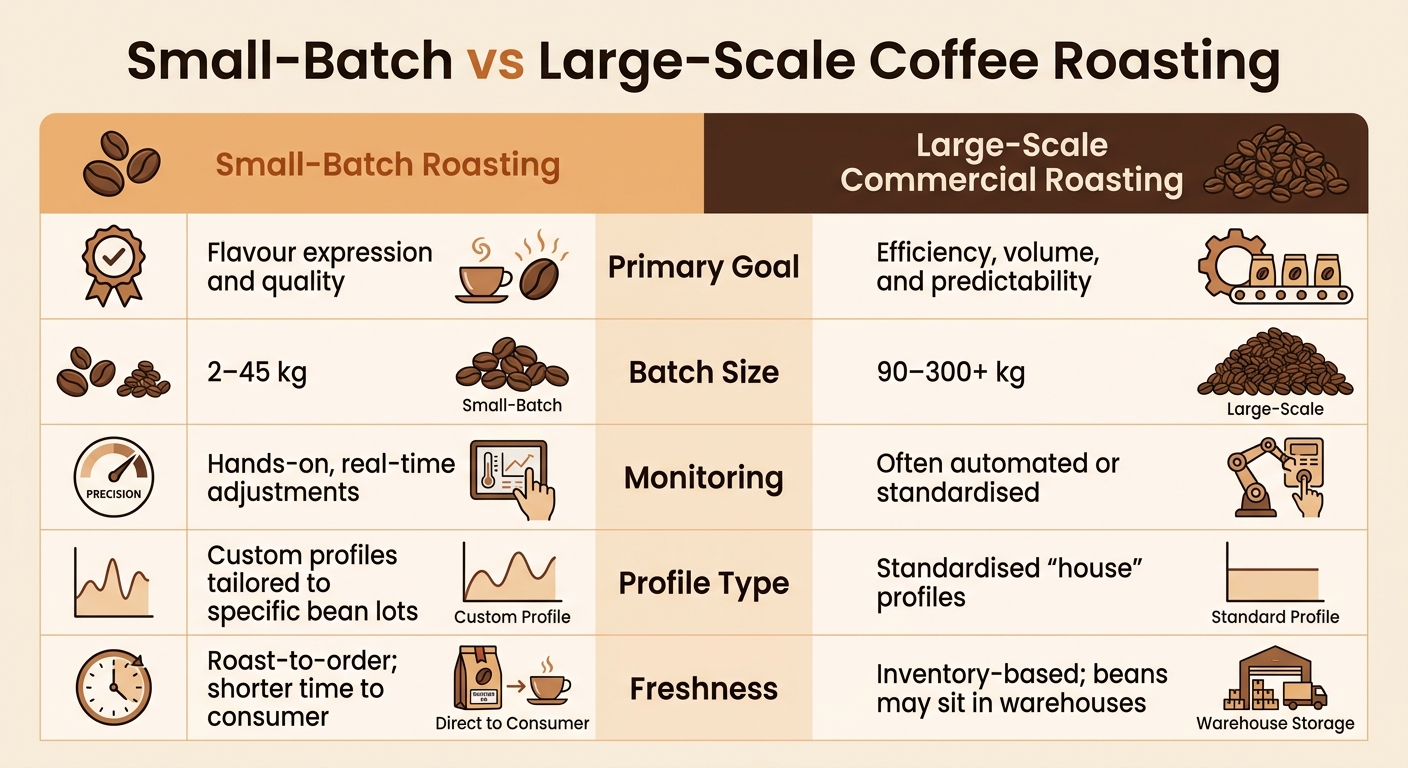
Small-Batch vs Large-Scale Coffee Roasting Comparison
Defining Small-Batch Roasting
Small-batch roasting is all about roasting smaller quantities of coffee beans - typically between 2 and 9 kg, though it can go up to 45 kg per batch. This method prioritises precision and careful attention to detail, ensuring that each bean is roasted to bring out its best qualities. Unlike large-scale operations, which focus on producing high volumes efficiently, small-batch roasting is more deliberate and responsive.
Achilles Coffee Roasters describes this approach perfectly:
"Small-batch roasting... is built around responsiveness and intention. Its goal is not simply to roast coffee 'correctly,' but to roast each coffee appropriately - according to its unique density, moisture content, processing method, and flavour potential." – Achilles Coffee Roasters
The idea is straightforward: no two coffees are the same. Beans from a high-altitude Ethiopian farm, for example, are vastly different from those grown in low-altitude Brazilian regions. Small-batch roasting allows roasters to adapt their techniques to the specific characteristics of each bean variety, rather than applying a one-size-fits-all method. This customisation is what gives artisanal roasters their edge, ultimately delivering a fresher, more flavourful cup.
Small-Batch vs Large-Scale Production
The contrast between small-batch roasting and large-scale commercial roasting goes beyond just the size of the batches. One of the key benefits of smaller batches is better control over heat. With fewer beans, the heat is distributed more evenly, reducing the chance of issues like scorching or "tipping", where the outside of the bean burns while the inside remains under-roasted.
Large-scale roasting, on the other hand, relies on systems with high thermal inertia. Once a large batch is in progress, it becomes difficult to make adjustments mid-roast. In contrast, small-batch roasting equipment is highly responsive, allowing roasters to tweak variables like gas levels, airflow, or drum speed in real time. This flexibility ensures that each roast is fine-tuned to highlight the unique qualities of the beans.
| Feature | Small-Batch Roasting | Large-Scale Commercial Roasting |
|---|---|---|
| Primary Goal | Flavour expression and quality | Efficiency, volume, and predictability |
| Batch Size | 2–45 kg | 90–300+ kg |
| Monitoring | Hands-on, real-time adjustments | Often automated or standardised |
| Profile Type | Custom profiles tailored to specific bean lots | Standardised "house" profiles |
| Freshness | Roast-to-order; shorter time to consumer | Inventory-based; beans may sit in warehouses |
Another standout feature of small-batch roasting is the quick feedback loop. Roasters can roast, rest, cup, and adjust a profile all in the same day based on sensory feedback. In large-scale roasting, the sheer volume of beans means delays in feedback, making it harder to refine individual batches. This immediate control in small-batch roasting helps preserve the freshness and distinct flavours that make each roast special.
How Small-Batch Roasting Keeps Coffee Fresh
Precise Control Over Roast Profiles
Small-batch roasting gives roasters the ability to adjust every detail in real time, thanks to the smaller amount of beans being roasted. This precise control ensures the beans develop evenly, avoiding scorched exteriors or underdeveloped interiors. The most critical stage is the development phase - right after the first crack - when sweetness and acidity are locked in. In small-batch roasting, even a 10–20 second difference can transform a coffee's flavour from vibrant to lifeless. By carefully monitoring the Rate of Rise (RoR), roasters can avoid overreacting heat changes that might burn off delicate flavours or cause the coffee to taste flat and "baked."
Managing heat and airflow effectively also removes smoke while preserving the coffee's floral and fruity notes. Once the roasting profile is achieved, rapid cooling halts the process immediately, locking in the coffee's unique characteristics. As Achilles Coffee Roasters explains:
"Roasting is the gatekeeper. It is the process that decides whether those inherent qualities are preserved, amplified, muted, or completely erased."
This level of precision helps protect the coffee's volatile oils and compounds, ensuring the beans retain their lively and expressive character long after roasting.
Shorter Time from Roasting to Delivery
The precision of small-batch roasting pairs perfectly with a roast-to-order model. Many small-batch roasters only roast beans when an order is placed, avoiding the need for pre-roasted stock that might lose quality over time. This ensures the coffee reaches customers while it's still at its best.
Freshly roasted coffee is at its peak between 5 and 30 days after roasting, and many roasters aim to ship their beans within 48 hours of roasting. Gene, Lead Roaster at Mountain Roaster Coffee, emphasises this approach:
"Roasting in small batches and only roasting when someone orders is key to delivering the freshest, highest-quality coffee possible."
Freshly roasted beans also contain carbon dioxide, which is essential for carrying aromatics and creating a rich crema in espresso. Smaller production volumes mean green beans are used more quickly, keeping the raw coffee as fresh as possible. By reducing the time between roasting and brewing, small-batch roasting ensures the vibrant flavours are preserved, combating oxidation and maintaining quality.
Better Packaging to Prevent Oxidation
Packaging plays a crucial role in keeping coffee fresh. Oxygen is one of coffee's greatest enemies - exposure to air can cause the oils in the beans to oxidise, resulting in dull, flat flavours. Small-batch roasters often use airtight bags with one-way valves to counter this. These valves let CO₂ escape, preventing the bag from bursting, while keeping oxygen out to preserve the coffee's fresh and vibrant qualities.
During the first few days after roasting, beans release CO₂ as part of the degassing process. The one-way valve effectively manages this without compromising freshness. For the best taste, roasters recommend letting beans "rest" for 3–5 days for filter brewing and 5–7 days for espresso. This rest period allows the CO₂ to settle, avoiding bitter or "gassy" flavours during brewing.
To maintain the freshness achieved through careful roasting and packaging, it's best to grind coffee just before brewing. Grinding increases the surface area exposed to oxygen, speeding up oxidation and flavour loss. A good way to check freshness is the "bloom" - the bubbling that occurs when hot water hits fresh grounds, releasing CO₂. Proper packaging and storage ensure that the care taken during roasting translates into an exceptional cup of coffee every time.
Benefits of Small-Batch Roasting for Coffee Drinkers
Better Flavour and Freshness
Small-batch roasting ensures that the unique characteristics of coffee beans - like the floral notes of Ethiopian varieties or the chocolatey sweetness of Brazilian beans - are preserved. Each roast is carefully tailored to highlight these distinct profiles. By adopting a roast-to-order approach, small-batch roasters deliver coffee during its peak flavour window, retaining essential elements like residual CO₂, which enhances both crema and aroma.
This commitment to freshness sets small-batch coffee apart. Unlike commercial coffee, which may sit in warehouses for weeks or even months before reaching store shelves, small-batch roasting ensures that beans are delivered at their best. The result? A vibrant, aromatic cup of coffee that celebrates the unique qualities of its origin.
Ethical Sourcing and Environmental Responsibility
Small-batch roasting goes beyond just great coffee - it also supports ethical and sustainable practices. Many small-batch roasters work directly with small-scale farmers through micro-lot sourcing, purchasing smaller, high-quality lots that larger operations often overlook. This direct trade model not only ensures farmers receive better wages but also encourages sustainable farming practices, benefiting local communities and ecosystems.
By roasting only what is needed, small-batch operations also minimise waste and reduce the environmental footprint tied to overproduction. At Creation Coffee, for instance, ethical sourcing and sustainability are at the heart of every roast. This approach means every cup not only delivers exceptional flavour but also contributes to the well-being of coffee-growing communities. It’s a perfect blend of quality and responsibility, where every roast reflects a commitment to both craftsmanship and integrity.
Connection to Craftsmanship
Small-batch roasting is more than a process - it’s an art form. Roasters rely on their senses to monitor subtle changes, like shifts in colour and aroma, during the roasting process, particularly during the critical first crack. This hands-on approach contrasts with the automated systems used in large-scale operations.
Every batch is fine-tuned with care. Roasters regularly cup their coffee and make precise adjustments - sometimes just a few seconds - to ensure the beans achieve their full potential. Choosing small-batch coffee means savouring a superior sensory experience while supporting artisans who are passionate about perfecting their craft, one roast at a time.
Conclusion
Small-batch roasting has transformed how we experience coffee, preserving the unique qualities of each bean from roast to cup. By roasting in smaller quantities - usually under 7 kg - roasters can fine-tune every detail, from temperature to cooling times, ensuring the distinct character of each coffee origin shines through. This method guarantees coffee is delivered at its freshest, capturing peak flavour.
But it’s not just about taste. Small-batch roasting also champions ethical sourcing by fostering direct relationships with farmers, encourages environmentally responsible practices, and minimises waste by producing only what’s needed. Roasters have the flexibility to make precise, real-time adjustments, unlocking the beans' full potential. These principles form the cornerstone of what we do at Creation Coffee.
At Creation Coffee, we bring this philosophy to life with hand-roasted, small-batch specialty coffee delivered fresh to homes across the UK. Each bag represents a commitment to quality, sustainability, and giving back - 10% of our profits support a children's charity. Whether you're drawn to the floral elegance of a single-origin Ethiopian or the rich, chocolatey depth of a carefully curated blend, small-batch roasting ensures every sip is vibrant, aromatic, and bursting with flavour.
FAQs
How do I know when my coffee was roasted?
When you're shopping for coffee, always look for the roast date on the packaging. This tells you exactly when the beans were roasted. Why is this important? Because coffee starts losing its peak quality right after roasting. To enjoy the best flavour and aroma, aim to consume your coffee within a few weeks of that date. Fresh beans make all the difference!
What’s the best way to store beans at home?
To keep your coffee beans fresh at home, use an airtight, opaque container made of materials like ceramic, stainless steel, or glass. Store this container in a cool, dark place, well away from sunlight or heat sources. Avoid putting your beans in the fridge or freezer, as fluctuating temperatures and moisture can negatively affect their flavour and aroma. Following these steps will help maintain their freshness and quality for a longer time.
When should I grind coffee for the freshest taste?
Grinding your coffee beans just before brewing is the key to capturing their freshest flavour. When coffee is pre-ground, it quickly loses its aroma and quality, diminishing the overall experience. By grinding on demand, you lock in the beans' full potential, ensuring a richer and more satisfying cup every single time.