


Coffee roasters across the UK are turning their profits into support for children's charities. From donating a portion of sales to funding community projects, these businesses are helping vulnerable children locally and internationally. Here’s what you need to know:
- Donation Models: Contributions range from fixed amounts per bag sold (50p–£5) to percentages of revenue or profits (e.g., 1%).
-
Key Contributions:
- Extract Coffee Roasters: Over £27,000 donated since 2007.
- Liverpool Coffee Roasters: Funded a 3D printer for Alder Hey Children's Charity in 2022.
- RISE Coffee Box: Supports education for 100 children in Uganda.
- Horsham Coffee Roaster: Helped provide 26,832 meals in 2024.
- Creation Coffee: Donates 10% of profits to Compassion, aiding child development globally.
- Community Efforts: Initiatives include barista training, building kitchens, and providing school supplies.
These efforts show how coffee purchases can directly support education, healthcare, and community development for children worldwide.
UK Coffee Roasters Supporting Children's Charities: Impact Statistics
How Coffee Roasters Support Children's Charities
Funds Raised for Children's Causes
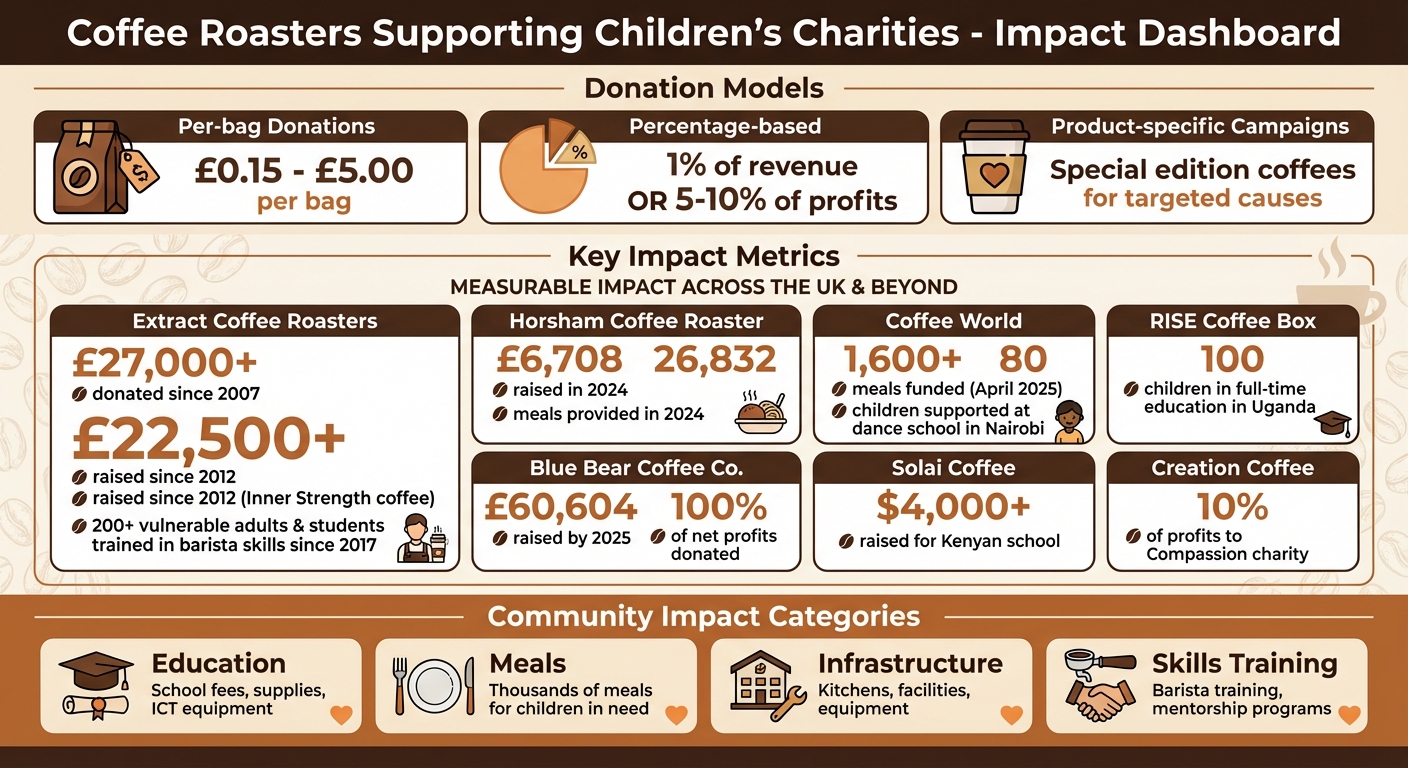
Coffee roasters use various donation models to raise money for children's charities. Some of the most common methods include per-bag donations (ranging from £0.15 to £5.00), percentage-based contributions (like 1% of revenue or 5-10% of profits), and product-specific campaigns, where sales from special edition coffees are directed to specific causes.
These efforts have made a noticeable difference. For instance, Horsham Coffee Roaster contributed £6,708 in 2024 to FareShare Sussex & Surrey by donating 5% of proceeds from their Brazil Single Origin coffee and 10% from their Christmas blend. This funding helped provide 26,832 meals to people in need. Similarly, in April 2025, Coffee World funded over 1,600 meals for 80 children at the Young Teens In Talent dance school in Nairobi, thanks to their 1% profit donation model. Extract Coffee Roasters has also made a lasting impact, raising more than £22,500 since 2012 through sales of their "Inner Strength" coffee, with £1 from each bag going to the Grounds Up Charity Collective.
Education-focused initiatives are equally impactful. RISE Coffee's "Friendly Coffee Fund" supports nearly 100 children in full-time education in Uganda's Rwenzori region by covering school fees, teacher salaries, and school supplies in partnership with Agri Evolve. On a similar note, Solai Coffee has raised over $4,000 to support Nyakinyua Primary School in Kenya, funding ICT equipment like laptops and printers, as well as stationery and sanitary products for female students.
But coffee roasters don’t stop at financial aid - they also engage directly with communities to create meaningful change.
Community Benefits Beyond Financial Donations
The impact of these initiatives goes far beyond the money raised, as many roasters actively engage with communities to provide hands-on support and resources.
Extract Coffee Roasters, for example, has offered barista training and mentorship to over 200 vulnerable adults and students since 2017. By collaborating with organisations like Empire Fighting Chance, they help young people in deprived areas develop valuable skills and career opportunities. Coffee World took a different approach in March 2025 by funding the construction of a new kitchen at the Island Muslim Girls Orphanage in Mtwapa, Kenya. They replaced inefficient outdoor cooking setups with a modern facility, installing a concrete oven, plumbing for running water, and safe electrical systems.
"For the girls at the orphanage, this kitchen means more than just a place to cook - it means security, dignity, and the promise of a better future." – Coffee World
sbb-itb-cca2aed
Creation Coffee: Supporting Children's Charities
Creation Coffee is a shining example of how a business can blend quality products with meaningful social impact, following in the footsteps of other charitable efforts within the coffee industry.
Ethically Sourced Coffee with a Mission
Located in Weaverham, Cheshire, Creation Coffee focuses on more than just great coffee - it champions ethical practices too. By using direct trade to source single-origin specialty beans, they ensure farmers receive fair compensation and promote sustainable farming. Each batch is hand-roasted in small quantities to maintain exceptional quality. What makes their approach stand out is the direct connection between the origins of their coffee and the communities that benefit from their charitable initiatives.
Donating 10% of Profits to Compassion
Creation Coffee goes beyond just sourcing responsibly; they donate 10% of their profits to Compassion, a global charity dedicated to child development through local churches. This model ensures that as the business grows, so does the positive impact on communities. Customers can feel confident knowing their coffee purchases support both ethical farming and meaningful change for children in need.
Supporting the Cause with Every Purchase
Every purchase, whether a single bag or a subscription, contributes to this mission. With options ranging from 250g to 1kg and flexible subscription plans, customers have plenty of ways to lend their support. Subscriptions, in particular, provide a reliable source of funds, ensuring sustained assistance for the charity's efforts.
Other Coffee Roasters Supporting Children
Many coffee roasters are making a meaningful difference by supporting children's charities. Their contributions go beyond financial aid, showcasing innovative models that prioritise community involvement and transparency.
Examples of Measurable Impact
Several coffee roasters have implemented unique approaches to create a positive impact on children's lives, each delivering noticeable results.
Blue Bear Coffee Co. channels 100% of its net profits into its foundation, Blue Bear Freedom. By 2025, the foundation had raised £60,604 to support programmes aiding children affected by human trafficking. This includes a £6,000 donation to Lily House, an aftercare shelter in the Dominican Republic. Their commitment to transparency is evident through the publication of annual reports.
RISE Coffee Box dedicates 1% of its sales revenue to their "Friendly Coffee Fund." In partnership with Agri Evolve, they support education in Uganda's Rwenzori communities by covering school fees, providing equipment, and paying teacher salaries. By early 2026, nearly 100 children were benefiting from full-time education. To ensure accountability, the initiative employs a project coordinator and a community Elder to monitor student attendance and progress.
In Kenya, Solai Coffee stepped up after the 2018 dam disaster that destroyed the Solai Nyakinyua Primary School. Collaborating with Acts of Wisdom, they raised over $4,000 (around £3,200) to provide ICT equipment such as laptops, desktops, printers, and essential supplies like stationery and sanitary towels for students.
Different Approaches to Charitable Giving
Coffee roasters are adopting various strategies to maximise their contributions and impact.
Horsham Coffee Roaster introduced a tiered donation model in 2024, where 5% of sales from their Brazil Single Origin and 10% from their Christmas blend go to FareShare Sussex & Surrey. These efforts raised £6,708, which funded 26,832 meals for people in need. Similarly, Small Batch Coffee Roasters contributes 50p from every bag of their "Throwdown" blend to 14 small UK charities focusing on youth mental health and education.
Coffee World takes a broader approach with its "Coffee World Change" initiative, allocating 1% of its profits to community-focused projects.
These diverse methods highlight how coffee roasters are working together to support community welfare and improve the lives of children globally.
Conclusion
Coffee roasters are proving that businesses can balance profit with purpose. Take Creation Coffee, for example - they donate 10% of their profits to Compassion, an organisation that supports communities in the regions where their coffee beans are grown. Through their efforts, they've funded documented savings and meals, addressing critical issues like child labour and poverty in coffee-growing areas.
This sentiment is perfectly captured by industry leaders:
"Imagine the positive effect that we could create in our world if just a fraction of the profits from coffee sales went to help high-risk and orphaned children succeed in life." – CSCOA
Roasters are contributing to change in meaningful ways - whether it’s funding education, providing meals, improving infrastructure, or creating jobs that help break the cycle of poverty. Methods like profit-sharing, per-bag donations, and targeted funding ensure that every cup of coffee contributes to making a difference. These initiatives underline the idea that coffee can be more than just a daily ritual; it can be a force for good.
When you support ethical roasters like Creation Coffee, you’re doing more than just buying coffee. You’re helping build stronger communities, supporting vulnerable children, and promoting a brighter future for coffee-growing regions. Every purchase becomes a small but impactful step towards aligning your values with meaningful action, showing that businesses can thrive while making a difference.
FAQs
How can I check a roaster’s charity impact is real?
To understand a coffee roaster's charitable impact, look for transparent reports that detail measurable outcomes. Many well-regarded roasters provide impact statements or share financial data to showcase their contributions. Additionally, check for third-party certifications, collaborations with recognised charities, or updates on their goals and achievements. For instance, Creation Coffee donates 10% of its profits to a children’s charity and openly shares its ethical sourcing practices on its website. Clear and verifiable information is essential when evaluating their efforts.
Does buying a subscription increase the charity donation?
Yes, subscribing to certain plans can help boost donations to children's charities. Many subscription services dedicate a portion of their proceeds to these organisations, ensuring your contribution not only benefits you but also supports important causes within the community.
What’s the difference between donating revenue and donating profits?
The key distinction is in how the donation amount is determined. Donating revenue refers to contributing a portion of total sales before any expenses are deducted. On the other hand, donating profits means giving a percentage of net income after covering all costs. For instance, donating 10% of profits aligns contributions with actual earnings, making it easier to maintain over time. Revenue-based donations, while offering immediate support, can risk financial strain if sales fluctuate.