


Faith-driven coffee roasters are blending quality coffee with ethical practices and Christian values.
These businesses go beyond profit, using their resources to support local and global communities. Here's what they focus on:
- Ethical Sourcing: Many roasters work directly with farmers, ensuring fair wages and better working conditions.
- Community Support: A portion of profits is often donated to charities or initiatives like poverty relief and anti-trafficking campaigns.
- Environmental Care: They aim to reduce waste and use sustainable materials, seeing stewardship as a responsibility.
- Faith Integration: Business practices are inspired by biblical principles, focusing on justice, generosity, and compassion.
Examples include Creation Coffee in Cheshire, which donates 10% of profits to Compassion, and Endiro Coffee in Uganda, which partners with women farmers to improve livelihoods. These businesses combine commerce with a mission to make a positive difference, locally and globally.
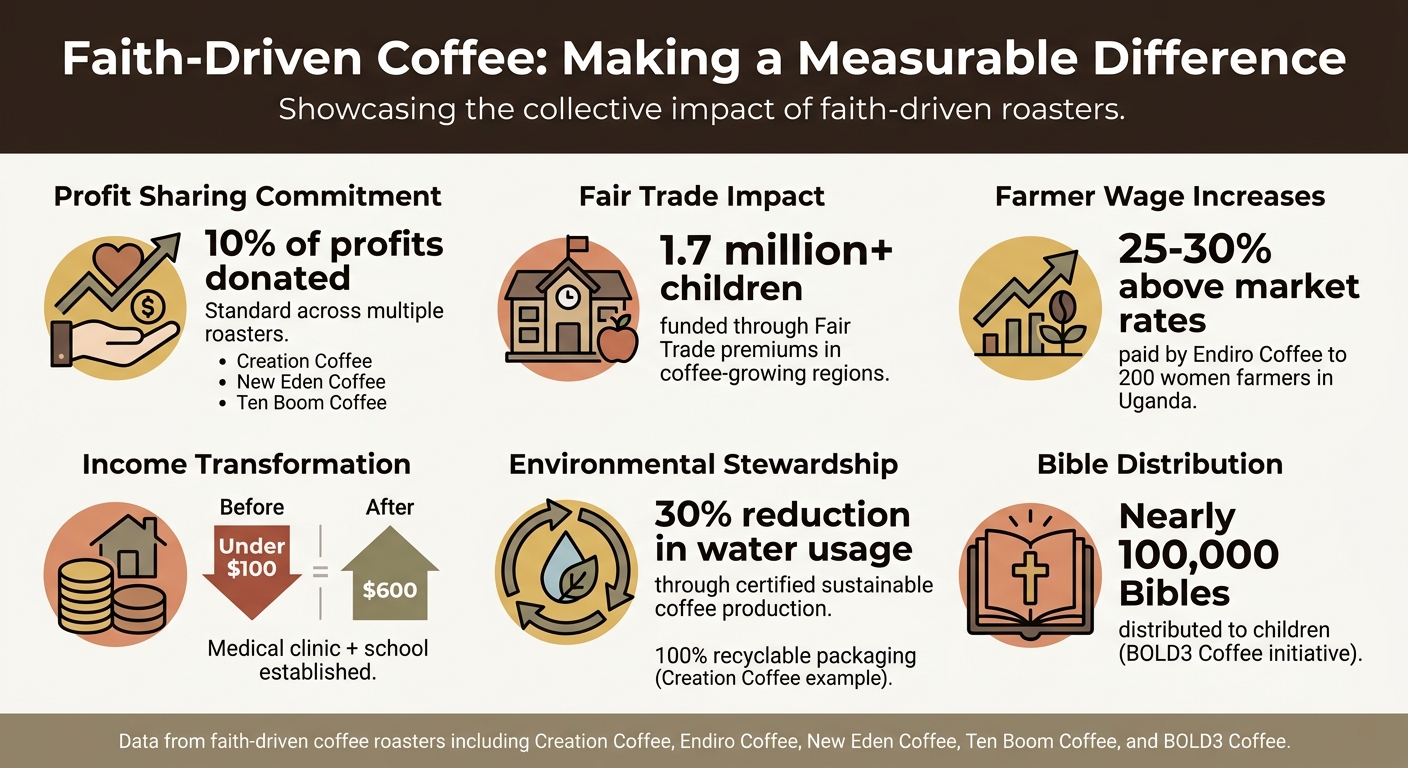
Faith-Driven Coffee Roasters: Impact by the Numbers
Using Coffee To Show Their Community Jesus’s Love | CBN
sbb-itb-cca2aed
How Faith Shapes Ethical Coffee Practices
For many Christian coffee roasters, faith forms the backbone of their business approach. Biblical teachings influence everything from sourcing beans to ensuring farmers are paid fairly. A key reference is Leviticus 19:13, which states, "Do not hold back the wages of a hired worker." This verse is often cited to emphasise the importance of paying farmers a living wage, rather than just meeting the minimum rates set by commodity markets. This philosophy is commonly referred to as "Kingdom economics", embodying values of justice, generosity, and compassion.
Proverbs 31:8, which calls believers to care for the vulnerable, further inspires these businesses. Many Christian roasters prioritise direct partnerships with small-scale farmers who may otherwise lack influence in traditional markets. These relationships are built on transparency and mutual respect, treating farmers as friends and neighbours. Faith-based principles, therefore, deeply shape how these roasters choose and trade their coffee.
Ethical Sourcing and Direct Trade
Christian roasters often rely on direct trade to bypass exploitative commodity markets, ensuring farmers receive a fair wage. Creation Coffee is a standout example, offering complete transparency in its supply chain. Customers can trace the journey of their coffee, reinforcing the company's commitment to ethical practices. As they explain:
Each bag reflects a deliberate choice to protect people and the planet.
This model fosters trust and accountability. The impact of ethical sourcing is significant - Fair Trade premiums, for instance, have funded schools for over 1.7 million children in coffee-growing regions. By choosing direct trade, these roasters not only support fair wages but also contribute to broader community development.
Environmental Care and Stewardship
For Christian roasters, environmental responsibility is seen as a biblical duty, rooted in Genesis 2:15's instruction to care for creation. This belief translates into practical actions, such as using energy-efficient equipment, adopting small-batch roasting to minimise waste, and opting for sustainable packaging solutions. Creation Coffee, for example, has achieved 100% recyclable packaging, using materials like LDPE4 for coffee bags and eco-friendly shipping supplies. As they put it:
Sustainability isn't just a policy for us - it's a promise.
Certified sustainable coffee production has tangible benefits, such as reducing water usage by 30%. These efforts reflect faith-based stewardship, demonstrating how responsible practices can benefit both local communities and the environment. For these roasters, such actions are more than good business - they are acts of worship, honouring God through their care for creation.
Stories of Community Impact
Local Community Support Initiatives
Christian coffee roasters often integrate their faith into their business models by funding meaningful community projects. A common practice among these businesses is donating 10% of their profits to causes aligned with their values. Take New Eden Coffee Roasters, for example. Founded in July 2024 by Mark and Jean Armstrong in West Cumbria, this roastery splits its 10% profit donation equally: 5% supports outreach projects at Woodbank Community Church in Whitehaven, while the other 5% goes to Elim Missions' BeFree campaign, which works to combat human trafficking. Mark Armstrong explains their mission:
It's important to us that New Eden doesn't just provide great coffee but also supports local outreach and global initiatives.
Creation Coffee takes a similar approach, blending charitable giving with community connection. They donate 10% of their profits to Compassion and partner with Stronghold Cafe in Weaverham, creating a welcoming space for fellowship and faith. Beyond financial contributions, these roasters foster environments where faith and community come together.
While these efforts focus on local communities, they also set the stage for broader, global initiatives, reflecting the roasters' commitment to making a difference beyond their immediate surroundings.
Supporting Coffee Farming Communities Worldwide
These faith-driven businesses extend their impact by supporting coffee-growing communities across the globe. Endiro Coffee, co-owned by Gloria Katusiime and Cody Lorance, forged a partnership with 200 women farmers in Bukalasi, Uganda, in February 2021. By paying 25–30% above market rates and introducing sustainable farming methods, Endiro Coffee helped increase household incomes from under $100 to $600. This financial growth enabled the community to establish a medical clinic and open a school. Gloria Katusiime shares their guiding principle:
God has called us to do things differently. When the farmers ask, "Why are you paying us higher prices?" we say, "It's what Jesus would do."
This approach highlights their dedication to biblical stewardship, ensuring their business practices bring genuine upliftment to those they work with.
Other roasters, like Ten Boom Coffee, donate 10% of every sale to protective shelters and family support programmes. Meanwhile, BOLD3 Coffee runs the "Buy a bag, 3 children receive God's Word" initiative, which has distributed nearly 100,000 Bibles to children.
These examples show how these coffee roasters view their work as more than just a business. For them, it’s a ministry rooted in faith, with a mission to serve and uplift communities both locally and globally.
Faith and Business Growth
Building Trust Through Transparency
Honesty and openness are key to forming meaningful connections with customers. When businesses openly share their values and back them up with real actions, people notice and appreciate the effort.
Take Abide Culture Coffee Roasters in North Idaho as an example. Their mission is crystal clear:
to know God and make Him known; Christ centred, spread the Gospel, impact and inspire our local community, integrity, build relationships, and create exceptional coffee
Their commitment goes beyond words. They donate 1% of their sales to organisations like Streetlights Bible, The Bible Project, and Samaritan's Purse. On top of that, their hands-on process - like hand-stamping their bags and manually documenting each batch - symbolises what they call the "maker's fingerprints." This personal touch sets them apart from mass production, showcasing their dedication to craftsmanship and Christian principles.
Abide Culture also strengthens its transparency through direct trade relationships. By working directly with farmers in places like Israel and Colombia, they ensure fair wages and responsible practices. This "better than fair trade" approach allows them to share the complete story of their coffee's origins, demonstrating stewardship rooted in biblical values and creating real improvements in farming communities.
Such transparency doesn’t just build trust; it creates a foundation for strong, lasting customer relationships.
Creating a Loyal Customer Base
When trust is built through transparency, it naturally leads to a loyal customer community, especially when shared values are at the heart of the experience. By sharing stories and purpose, businesses can turn one-time buyers into dedicated supporters.
Crazy Faith Coffee, founded by singer-songwriter John Waller, takes this idea to heart. Inside every bag, they include an inspiring "crazy faith" story. Waller explains:
Coffee is just a great vehicle to take stories to places that they would not otherwise get to go
This simple addition transforms a regular purchase into something meaningful and shareable.
Their subscription model adds another layer to this connection. With a "two-to-one" approach, customers are encouraged to keep two bags and give one away, spreading both coffee and faith. This creates a community bound by shared beliefs and a collective mission.
Similarly, Ten Boom Coffee Roasters builds loyalty by linking its brand to a legacy of faith. Named after Corrie ten Boom, they follow a direct-trade sourcing model and donate 10% of every sale to faith-based initiatives, such as protective shelters and community restoration projects. Their mission is clear:
We are committed to making a positive impact in the world, driven by our faith and our mission to support communities and organisations that are shining the light of Christ
Mark Armstrong of New Eden Coffee Roasters sums it up beautifully:
We want to be able to show people who God really is and help people see how down-to-earth Jesus is. He's someone who's in our everyday life, not just someone who's in our Sundays
Conclusion
The stories shared above illustrate how faith can inspire ethical business practices and meaningful community contributions. Faith-driven coffee roasters show that success in business can align with principles like ethical sourcing and genuine care for communities.
Take Creation Coffee as an example. They dedicate a portion of their profits to both local outreach programmes and global efforts, supporting coffee-farming communities by ensuring fair wages and funding initiatives that combat poverty and exploitation.
What sets these businesses apart is their ability to make an impact on several fronts. From guaranteeing fair prices for farmers through direct trade relationships to fostering local connections with neighbourhood partnerships, and even supporting charitable projects - these efforts resonate deeply with customers. Transparency and consistent action not only create trust but also build lasting loyalty, proving that ethical principles and commercial success can complement each other. When businesses visibly commit to their values through measurable actions - be it profit sharing, direct trade, or creating community spaces - they invite customers to become active participants in their mission.
FAQs
What is “Kingdom economics” in coffee?
Kingdom economics in coffee represents a business philosophy grounded in Christian principles, with the goal of honouring God through ethical and impactful practices. This approach emphasises ethical sourcing, environmental responsibility, and community engagement, shifting the focus away from pure profit. Many Christian coffee roasters embody these values by supporting missions or local initiatives, promoting reconciliation, and showcasing love and integrity in their operations.
How can I check if a roaster really pays farmers fairly?
To determine if a roaster treats farmers fairly, examine their dedication to transparent and ethical sourcing. Certifications like fair trade or direct trade are good indicators that farmers are being paid fair wages. You can also review the roaster's policies and partnerships, as these often detail how they support farming communities.
How does buying coffee translate into community impact?
Purchasing coffee from faith-driven, ethical brands like Creation Coffee can make a real difference in communities. Through their commitment to direct trade, farmers are paid fair prices, which allows them to invest in areas like education, healthcare, and sustainable farming practices. On top of that, Creation Coffee donates 10% of its profits to children’s charities, funding important community initiatives. By supporting brands like this, you're not just buying coffee - you’re helping to improve lives, support social justice, and contribute to a mission grounded in Christian values.