


When it comes to keeping coffee fresh, proper storage is key. Stale coffee not only tastes bad but also wastes the effort and resources used to produce it. Here’s the bottom line:
- Coffee beans lose their flavour due to oxygen, moisture, heat, and light.
- Storing beans in airtight, opaque containers at room temperature (15°C–21°C) slows this process.
- Reusable containers made from stainless steel, ceramic, or glass are better for the environment than single-use plastics.
- Grinding beans speeds up staling - grind only what you need for each brew.
- Buy freshly roasted coffee in small amounts to avoid waste, ideally enough for 2–4 weeks.
For green coffee beans, which last longer but are sensitive to moisture, airtight and moisture-proof solutions like hermetic liners are best. Avoid common mistakes like storing coffee in the fridge or pre-grinding in bulk. These simple adjustments not only preserve taste but also reduce waste.
Stop Storing Your Coffee Like This (Do This Instead!)
sbb-itb-cca2aed
Coffee Freshness and Why Storage Matters
Coffee starts losing its freshness almost immediately after roasting. A series of chemical reactions kick off, gradually diminishing its flavour and aroma. Knowing what drives this process can help you make better decisions about storing your coffee.
How Coffee Ages Over Time
The primary enemy of coffee freshness is oxidation. When oxygen reacts with the natural oils in coffee, it breaks them down into compounds that bring out sour and rancid flavours. Freshly roasted beans release CO2 for a few days, which temporarily slows oxidation. But once that CO2 dissipates, the oxidation process speeds up.
Moisture also plays a destructive role. Coffee is hygroscopic, meaning it absorbs moisture from its surroundings. Even a slight increase in moisture - just 2–3% - can degrade flavour and promote mould growth. Meanwhile, exposure to light, especially UV rays, damages flavour compounds, even under typical kitchen lighting.
Grinding makes things even worse. Grinding coffee increases its surface area by over 10,000 times, exposing it to air and speeding up the staling process. What might take weeks for whole beans happens in mere minutes for ground coffee.
Green, unroasted beans, on the other hand, are much more durable. Their outer layer acts as a shield, preserving the flavour compounds inside. This protective layer allows green beans to stay fresh for nearly a year. Once roasted, however, those compounds are exposed, and the coffee starts to deteriorate within weeks.
Ideal Storage Conditions for Coffee
To keep your coffee tasting as fresh as possible, you need to tackle the four main threats to freshness: oxygen, moisture, heat, and light. Proper storage requires controlling these elements.
| Factor | Effect on Coffee | Recommended Condition |
|---|---|---|
| Oxygen | Causes oxidation and rancidity | Airtight seal or vacuum |
| Light | Triggers photodegradation | Opaque container or dark cupboard |
| Heat | Speeds up chemical staling | 15°C–21°C room temperature |
| Moisture | Leads to mould and flavour loss | Dry environment, below 60% humidity |
The ideal temperature for storing roasted coffee is between 15°C and 21°C, which works well for most UK homes. Just make sure your beans are kept away from heat sources like kettles, ovens, or toasters. In a typical British kitchen, a cool, dark cupboard is often the perfect spot .
"Storage does not 'stop' aging. It slows the rate of degradation." - Quantum Brew Coffee
Temperature matters more than you might think. For every 10°C increase, flavour loss doubles . So, keeping your coffee near a warm hob could be accelerating its decline. A simple adjustment, like moving it to a cooler spot, can make a noticeable difference in the quality of your morning brew.
Eco-Friendly Storage Materials and Containers
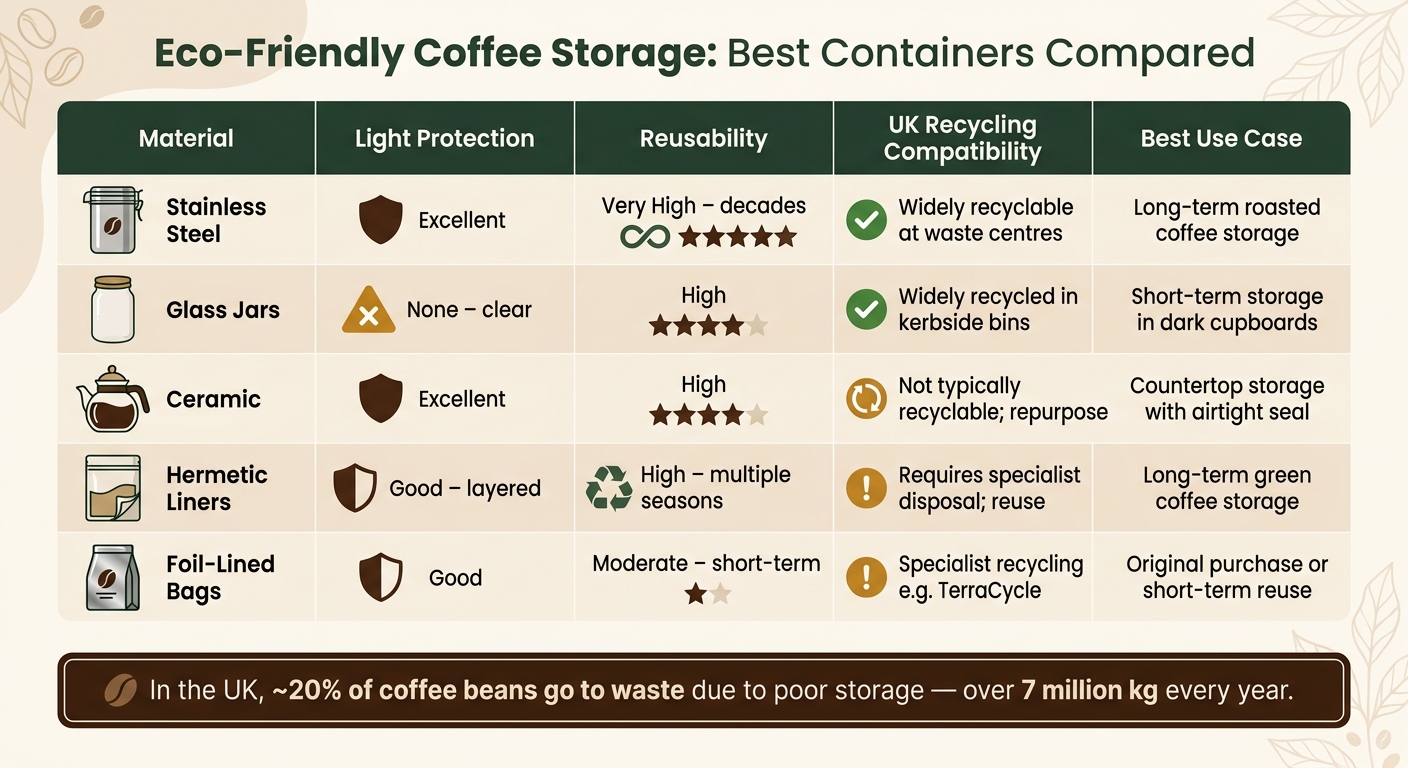
Eco-Friendly Coffee Storage: Best Containers Compared
Picking the right container not only keeps your coffee tasting great but also helps cut down on waste. In the UK, around 20% of coffee beans go to waste due to poor storage, adding up to more than 7 million kilograms every year. Choosing suitable storage can make a big difference. Here’s a look at the best options for storing both roasted and green coffee.
Storage Options for Roasted Coffee
Stainless steel containers are a top choice for roasted coffee. They’re durable, opaque, and often come with airtight gaskets or vacuum technology. Models like the Airscape Classic or the Fellow Atmos actively remove oxygen, which helps preserve freshness. These containers usually cost between £30 and £80+, but as Caffé Prima explains: "A £40 container that preserves £150 worth of coffee annually represents excellent value".
Glass jars, priced at £10–£25, are another option. They’re odour-resistant and can be recycled via kerbside collections. However, clear glass jars should always be stored in dark cupboards to protect coffee from UV damage. Airtight ceramic or steel containers with one-way valves can keep 92% of coffee’s aromatic compounds intact for up to 30 days.
"If you're tempted by that big clear jar on the counter, save it for biscuits, not coffee" - FreshGround
Ceramic and stoneware containers are great for blocking light and maintaining stable temperatures, making them ideal for kitchen countertops. Look for options with rubber gasket seals for an airtight fit. While ceramic isn’t recyclable in standard UK facilities, it’s a solid long-term investment.
Don’t overlook reusing the original packaging. If your coffee comes in a foil-lined bag with a one-way degassing valve, it’s often more eco-friendly to keep using that bag rather than buying a new container. Just press out the air, reseal tightly, and, for extra protection, place the bag inside an airtight canister.
These solutions work well for roasted coffee, but green coffee beans need a different approach.
Storage Solutions for Green Coffee
Green coffee beans are much more stable than roasted ones, with a storage life of up to 12 months. However, they’re highly sensitive to moisture. Because green beans are hygroscopic, even slight humidity changes can lead to mould or flavour loss - an issue in the UK’s damp climate.
The go-to solution for green coffee is hermetic liners, like those from GrainPro. These liners create an airtight, moisture-proof seal and can be reused for multiple seasons, making them a low-waste option. For home users or small roasteries dealing with larger quantities, pairing hermetic liners with food-grade buckets offers a cost-effective way to maintain stable humidity and prevent odours from seeping in during long-term storage.
Comparing Storage Materials
Here’s a quick breakdown of key storage materials for UK kitchens and small roasteries:
| Material | Light Protection | Reusability | UK Recycling Compatibility | Best Use Case |
|---|---|---|---|---|
| Stainless Steel | Excellent | Very High (decades) | Widely recyclable at waste centres | Long-term roasted coffee storage |
| Glass Jars | None (clear) | High | Widely recycled in kerbside bins | Short-term storage in dark cupboards |
| Ceramic | Excellent | High | Not typically recyclable; repurpose | Countertop storage with airtight seal |
| Hermetic Liners | Good (layered) | High (multiple seasons) | Requires specialist disposal; reuse | Long-term green coffee storage |
| Foil-Lined Bags | Good | Moderate (short-term) | Specialist recycling (e.g., TerraCycle) | Original purchase or short-term reuse |
There’s no one-size-fits-all solution. Stainless steel stands out for its durability, glass is easy to recycle but needs to be kept in the dark, and ceramic offers a balance of style and function. For green coffee, hermetic liners are unmatched. The best choice depends on your storage habits - how much coffee you buy, where you store it, and how quickly you use it. Matching the material to your needs ensures better results every time.
Best Practices for Low-Waste Coffee Storage
Simple, consistent habits can go a long way in keeping your coffee fresh while cutting down on waste.
Daily Habits for Storing Roasted Coffee
The best rule of thumb? Only buy what you’ll drink within two to four weeks. Roasted coffee beans are at their best between three days and two weeks after roasting, but their quality starts to drop noticeably after four to five weeks. For example, if you only use 250 g of coffee every two weeks, buying a 1 kg bag means most of it will likely go stale before you finish it.
Once you open a bag, transfer the beans into the smallest opaque, airtight container you have. This reduces oxygen exposure by minimising the empty space. Store the container in a cool, dark cupboard (ideally between 15°C and 21°C) and keep it far from heat sources like kettles, toasters, or ovens. To maintain freshness, grind only the amount you need just before brewing, as grinding speeds up oxidation.
"The difference between properly stored and poorly stored coffee is the difference between a vibrant, complex cup and a disappointing, flat brew." - Coffee Factory
Green coffee beans require similar attention, though their storage needs differ slightly.
Low-Waste Routines for Green Coffee
Green coffee beans are more stable than roasted ones, staying fresh for up to 12 months. However, they’re very sensitive to humidity and strong odours. A good practice is to label each container with the delivery or harvest date and always use the oldest stock first. Forgotten beans in the back of a cupboard are a common source of unnecessary waste.
In UK homes or small roasteries, avoid storing green coffee in places like garages, basements, or near boilers. These areas often have damp conditions or fluctuating temperatures, which can lead to mould. Instead, store green beans in a stable pantry or cupboard where the temperature stays between 10°C and 20°C, with humidity levels around 50–60%. Keep them well away from strong-smelling items such as spices or cleaning products, as green beans easily absorb surrounding odours.
Common Storage Mistakes to Avoid
Avoiding a few key missteps can make a big difference in keeping your coffee fresh and your waste minimal.
One major mistake is storing coffee in the fridge. Coffee beans absorb fridge odours - everything from leftover pizza to cleaning products - and condensation damages their oils, which are crucial for flavour.
Another common error is pre-grinding coffee in bulk. Ground coffee loses up to 50% of its aromatics within just seven days. Instead, use a burr grinder and grind only what you need for each brew. If you buy coffee in bulk, divide it into small, weekly portions and store them in vacuum-sealed bags. Only defrost what you’ll use in a week, and never refreeze coffee.
Investing in vacuum-sealed containers can also be a game-changer. These remove around 95% of oxygen, compared to the 20–40% removed by standard airtight jars. For anyone serious about reducing waste and enjoying fresher coffee, it’s a worthwhile upgrade.
Ethical Responsibility in Coffee Storage
Storing coffee properly doesn't just preserve its flavour; it also respects the immense resources poured into its production. This perspective sheds light on the real impact of waste and the coffee industry's role in addressing it.
The Cost of Wasted Coffee
Coffee is one of the most resource-intensive crops on the planet. When coffee goes stale and is discarded, all the resources invested in its journey - from farm to cup - are wasted. Beyond the loss of taste, up to 60% of key aroma compounds disappear within just two weeks if coffee isn't stored correctly. On the other hand, proper storage can extend flavour retention by 300–400% compared to poor practices. This isn't a trivial difference - it can mean the contrast between savouring a perfect brew and throwing it away. So, how you store your coffee isn't just about taste; it's about respecting the effort behind every bean. In this way, proper storage becomes an ethical choice.
"The biggest waste is often lost coffee quality. If coffee goes stale and gets binned, all the emissions from farming, processing, drying, shipping, and roasting have already happened for no benefit." - James Roche, Co-Founder & Coffee Roaster, Wrexham Bean Co.
Creation Coffee's Commitment to Responsible Sourcing
Some brands have taken significant steps to address these ethical concerns. Creation Coffee exemplifies this by practising responsibility throughout their supply chain. Their approach includes roasting beans in small batches and shipping them quickly to ensure customers receive coffee at its freshest.
They also build direct trade relationships with farmers, supporting sustainable farming practices and ensuring fair pay. As Creation Coffee explains: "Every bag you buy is a small act of solidarity - with the farmer who grew the beans, and with the children in their communities." However, the story doesn't end with the purchase. How you store your coffee at home determines whether that hard work is honoured or wasted.
In addition to their sourcing practices, Creation Coffee donates 10% of profits to Compassion UK, aiding children in coffee-growing regions like Colombia, Guatemala, and Ethiopia. Their packaging is made from 100% recyclable LDPE4 materials, and they encourage customers to recycle through local schemes instead of sending bags to landfill. These efforts underline their commitment to sustainability at every level of the process.
Conclusion
Sustainable coffee storage doesn’t have to be complicated. It’s about protecting your beans from oxygen, light, heat, and moisture, buying only what you’ll use in 2–4 weeks, and opting for sturdy, reusable containers. These small, practical adjustments can make a big difference over time.
Research backs this up: improper storage causes significant coffee waste in UK households annually. Even an affordable stainless steel canister can preserve flavour far better than leaving beans in an unsealed bag.
"Quality storage containers pay for themselves through reduced waste and better-tasting coffee." - Caffé Prima
Storage is the final step in respecting the effort behind every bean - from farmers and processors to the roasters who bring out its best. Creation Coffee embraces this philosophy, hand-roasting in small batches and directly supporting farming communities. By storing your coffee properly, you’re honouring that journey.
Keep whole beans in a cool, dark spot (15°C–21°C), minimise air in your container, grind only what you need, and label with the roast date. These habits not only save money and reduce waste but also ensure every cup tastes as good as it should - a simple yet meaningful way to support sustainable practices at every stage.
FAQs
How can I tell if my coffee is stale?
Stale coffee is easy to spot if you know the signs. Look out for no bloom during brewing, a flat or lifeless flavour, a dry texture, a dull appearance without the usual oily sheen, and a weak or musty aroma.
Want to test it? Grind some beans and take a sniff. If there’s barely any fragrance, the freshness is long gone. Another trick is to seal the beans in a bag and leave it overnight. Fresh beans release gases that inflate the bag, but if it stays flat, the beans are stale. Still unsure? Pour hot water over the grounds - if there’s no bubbling, it’s time to say goodbye to those beans.
Is freezing coffee a good way to reduce waste?
Freezing coffee can be a practical way to cut down on waste, especially if you tend to buy in bulk. However, it’s not the best option for everyday use. Coffee beans are highly absorbent, soaking up moisture and odours from their surroundings. Plus, repeatedly freezing and thawing them leads to condensation, which can harm their quality.
If you decide to freeze your coffee, make sure to divide it into small, airtight portions - about a week’s supply works well. This way, you only thaw what you need. Allow the frozen coffee to reach room temperature before opening the container to avoid moisture build-up. For regular storage, keep your beans in an opaque, airtight container, placed in a cool, dark cupboard. This method helps maintain freshness without the hassle of freezing.
What’s the most eco-friendly container if I buy coffee every week?
For those who enjoy coffee weekly, the best choice for storage is an opaque, airtight container made from stainless steel or ceramic. These materials don’t react with the coffee and effectively protect it from light and oxygen. Opt for a sturdy canister with a vacuum seal or a one-way valve - this helps remove air, keeping your coffee fresher for longer. Not only does this cut down on waste, but it also ensures your Creation Coffee remains rich in aroma and flavour with every brew.