


I’d use on-site solar to cut a roastery’s grid use - not replace its backup supply. My starting point: measure electricity separately from gas, then size the panels to suit daytime demand and the site. If gas heats your roaster, solar won’t replace that fuel.
I’d focus on three things:
- Match production to daylight: plan roasting, grinding and packing around measured demand and expected solar output.
- Check storage and backup: compare battery capacity in kWh, power in kW and runtime. Keep grid cover for shortfalls.
- Plan for winter: check equipment and output, clean panels when needed, and budget for more grid electricity during darker months.
My rule: <u>plan around when you need power</u>, not just annual totals. Batteries store electricity; they don’t generate it.
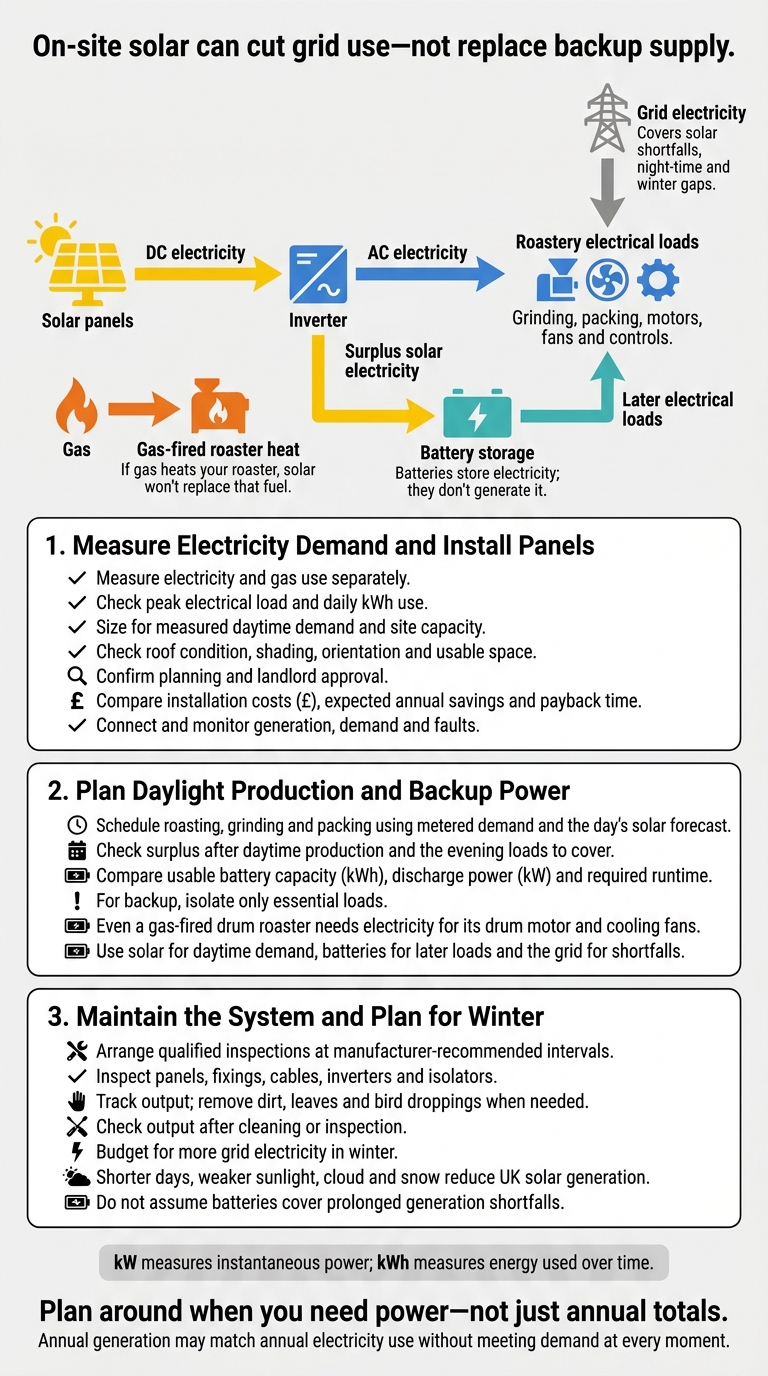
How Solar Power Supports a Coffee Roastery
Step 1: Measure Electricity Demand and Install Panels
Measure Electricity and Gas Use Separately
Measure electricity and gas use separately. Leave gas-fired heat out of the solar sizing total, and compare energy use with roasting and packing schedules. Meter readings help identify peak load and daily kWh use. Size the array against daily peak use rather than annual totals.
kW measures instantaneous power; kWh measures energy used over time. Check the highest electrical load when equipment runs at the same time.
Check the Site and Size the Solar Array
Ask a qualified installer to assess the roof’s condition, shading, orientation and usable space. Consider ground mounting if needed, and confirm planning and landlord approval before installation.
Base the array size on measured daytime demand and site capacity, not roof space alone. Get quotes in £ and compare installation costs with expected annual savings and payback time.
Connect and Monitor the Solar System
Panels produce direct current (DC), which an inverter converts to alternating current (AC) for the roastery. Use surplus electricity on site or store it in batteries. Draw power from the grid when solar output drops.
Monitor generation, demand and faults to spot underperformance quickly. These readings will help you match roasting hours to daylight and set battery or grid backup levels.
sbb-itb-cca2aed
Step 2: Plan Daylight Production and Backup Power
Schedule Work Around Solar Output
Once monitoring shows your daily solar output, move roasting, grinding and packing into daylight hours. Set the production window using metered demand and the day’s solar forecast. Small-batch roasting makes scheduling easier without disrupting consistency.
Choose Batteries for Storage or Backup
Before buying a battery, check how much surplus power remains after daytime production and which evening loads it needs to cover. Compare usable capacity in kWh, discharge power in kW and required runtime.
For backup, isolate only the loads you need to keep running. Even a gas-fired drum roaster needs electricity for its drum motor and cooling fans.
Use Solar, Batteries and the Grid Together
Use solar to meet daytime demand, batteries to supply later loads and the grid to cover shortfalls.
ROASTING COFFEE BY SOLAR POWER #coffee #solarpower
Step 3: Maintain the System and Plan for Winter
Keep the system reliable with regular checks, cleaning and a plan for seasonal changes.
Inspect Equipment and Check Output
Arrange for a qualified professional to inspect panels, fixings, cables, inverters and isolators at the manufacturer’s recommended intervals. Track output data to spot faults before they affect your roast-day electricity supply.
Remove dirt, leaves and bird droppings from panels, especially if the roastery is near trees or gardens. After cleaning or inspection, check the output data to confirm the system still performs as expected.
Budget for Lower Winter Output
Plan for more grid use during long cloudy spells. Shorter days, weaker sunlight, cloud and snow all reduce UK solar generation in winter.
Batteries store available electricity; they don’t produce it. Don’t assume they’ll cover a prolonged shortfall in generation.
Know What Solar Cannot Cover
Annual generation may match annual electricity use, but that doesn’t mean solar can meet demand at every moment. Fans, motors and controls still need grid power during night-time and winter gaps.
Conclusion: Keep Roasting Reliable with Solar
On-site solar can cut a roastery’s grid use. But reliable production depends on measuring demand, scheduling work during daylight hours, and managing solar generation, battery storage and grid backup together - especially in winter.
FAQs
How do I calculate solar payback for my roastery?
Track energy use for each roasting batch and other running loads. Use roasting hours and seasonal solar output to estimate how much of your annual electricity use (kWh) your on-site solar will cover and how much you’ll still need to buy from the grid.
Payback period = total installed solar cost ÷ annual savings from solar, including income from exported electricity and lower grid electricity costs. Review energy use per batch to account for changes in efficiency under different UK conditions.
Will my solar system work during a power cut?
Whether your solar panels work during a power cut depends on your setup. A standard grid-tied solar system shuts down automatically for safety, stopping electricity from feeding back into the grid.
To keep key equipment running, you need an off-grid or hybrid system with battery storage and an islanding inverter. This setup lets your facility disconnect from the grid and run on stored energy. Without it, your solar panels won’t work during a power cut.
How much battery backup do I need in winter?
Battery backup needs depend on energy use per roast batch and lower solar generation in winter. Measure each batch’s energy use, then calculate the battery capacity needed for planned production when solar output is at its lowest.
Colder UK winter temperatures may require a 5–10°C increase in charge temperature to offset slower heat transfer. Grid backup remains a practical requirement for keeping production consistent.